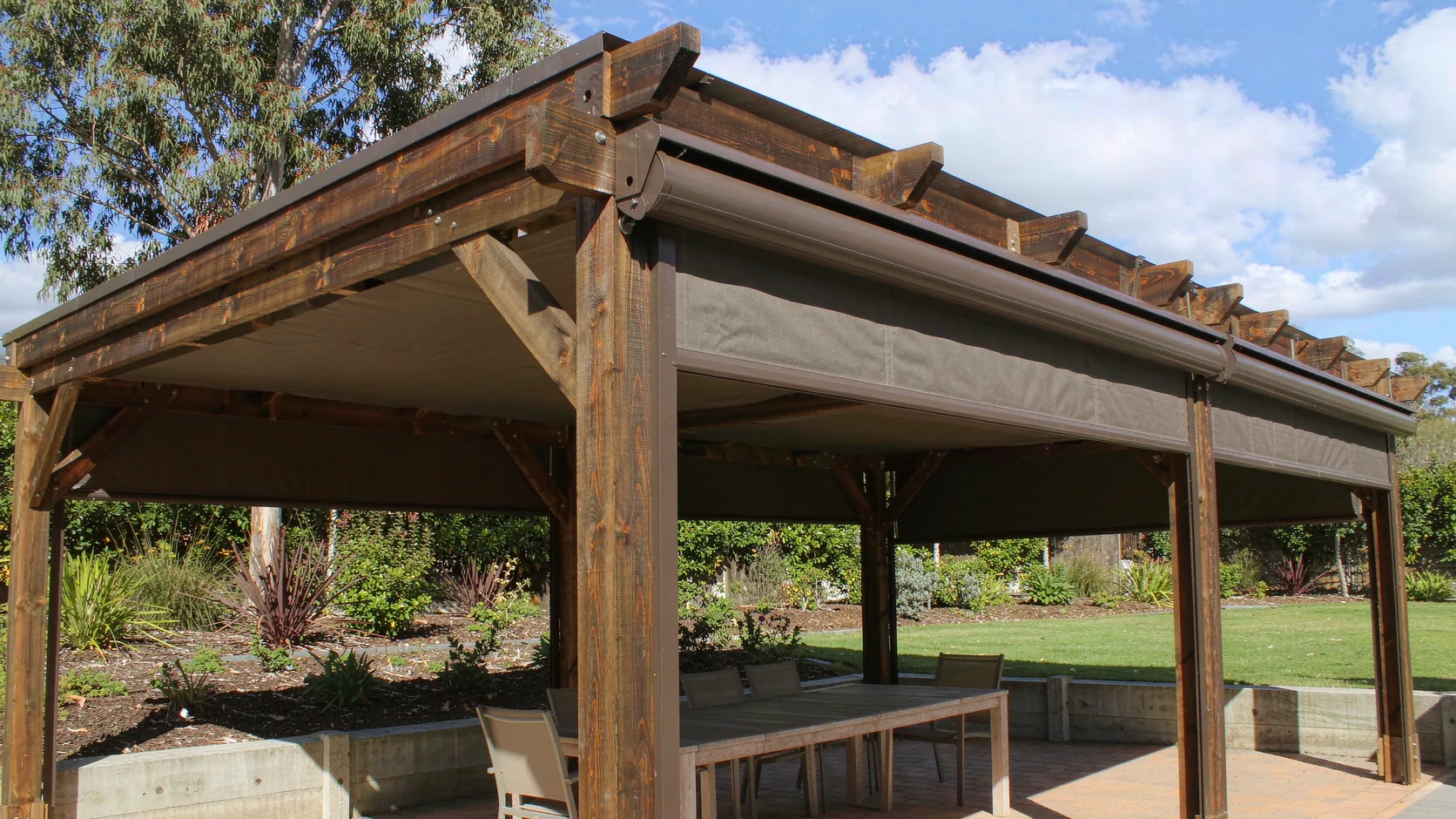
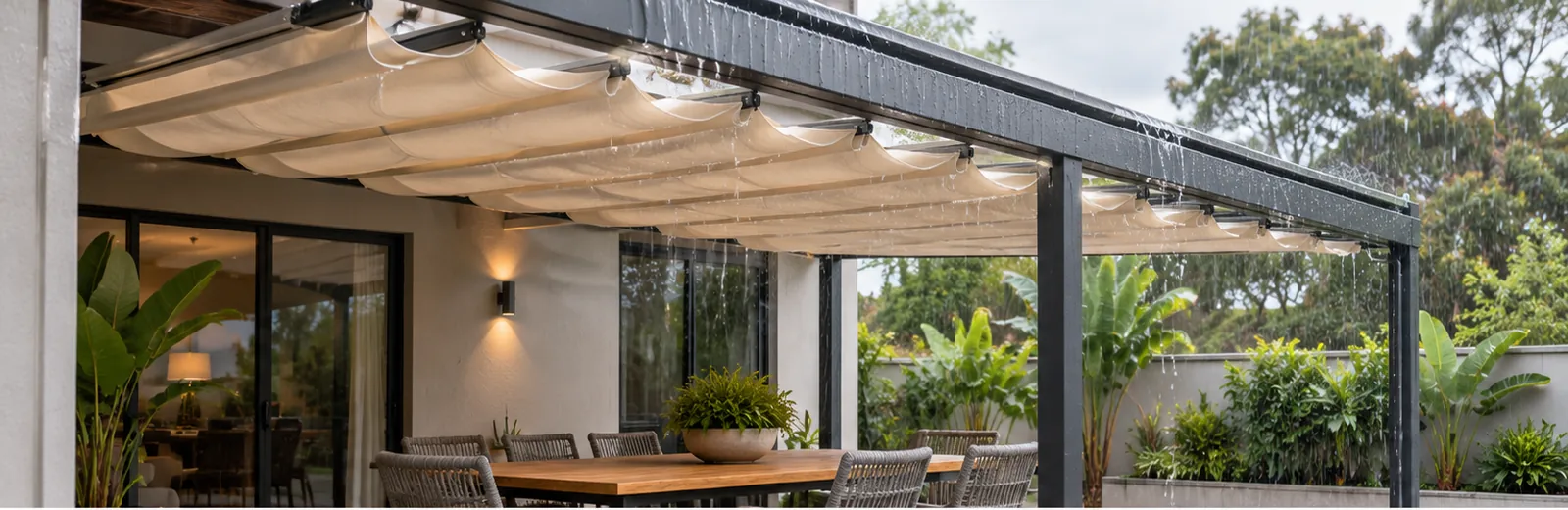
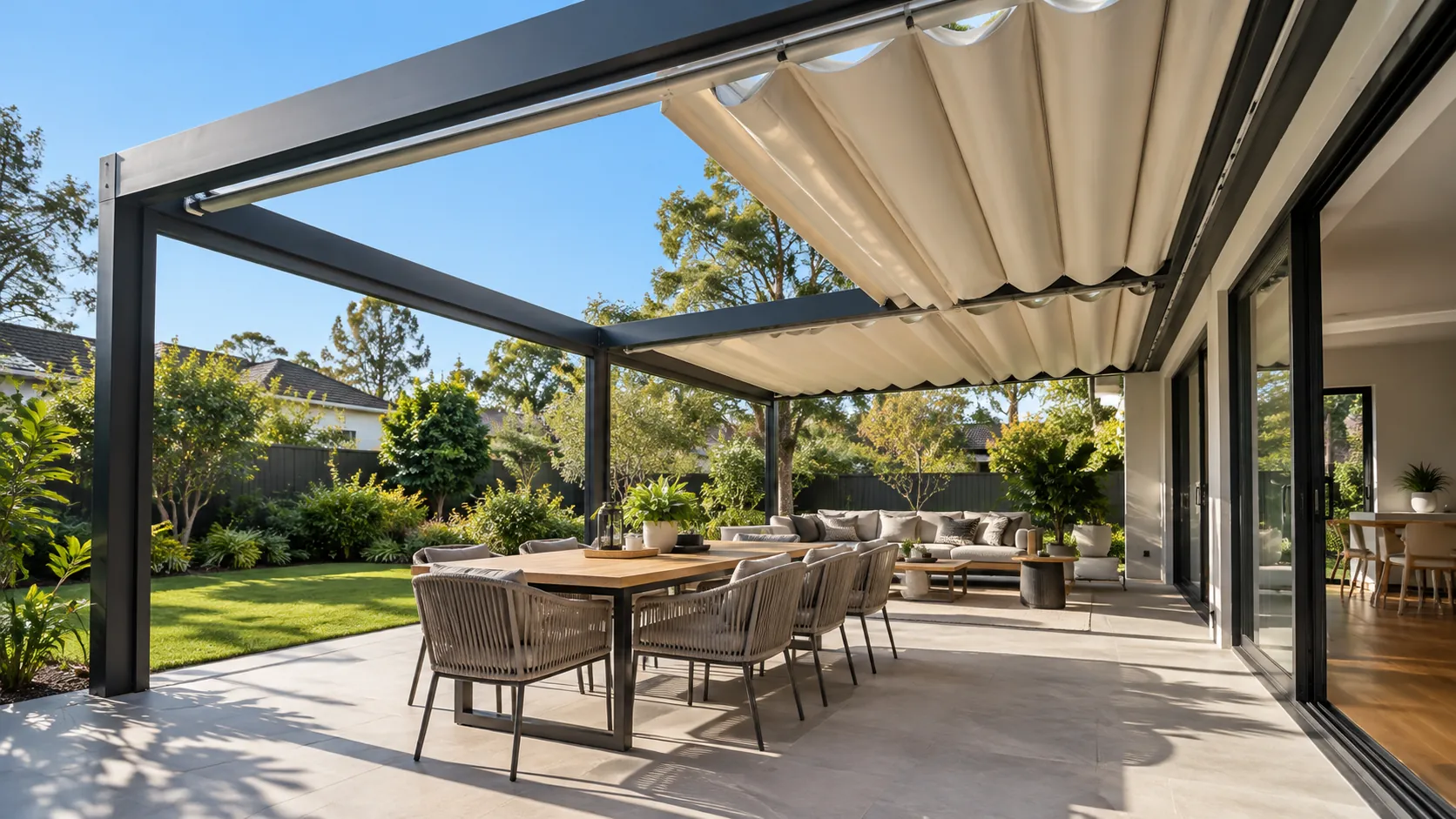
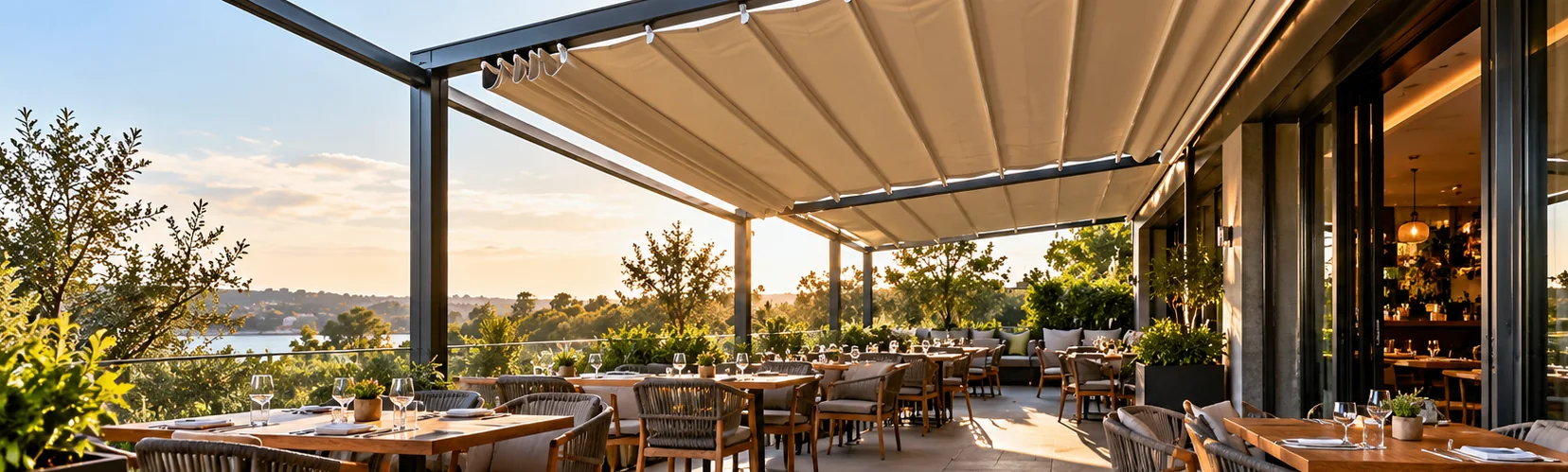
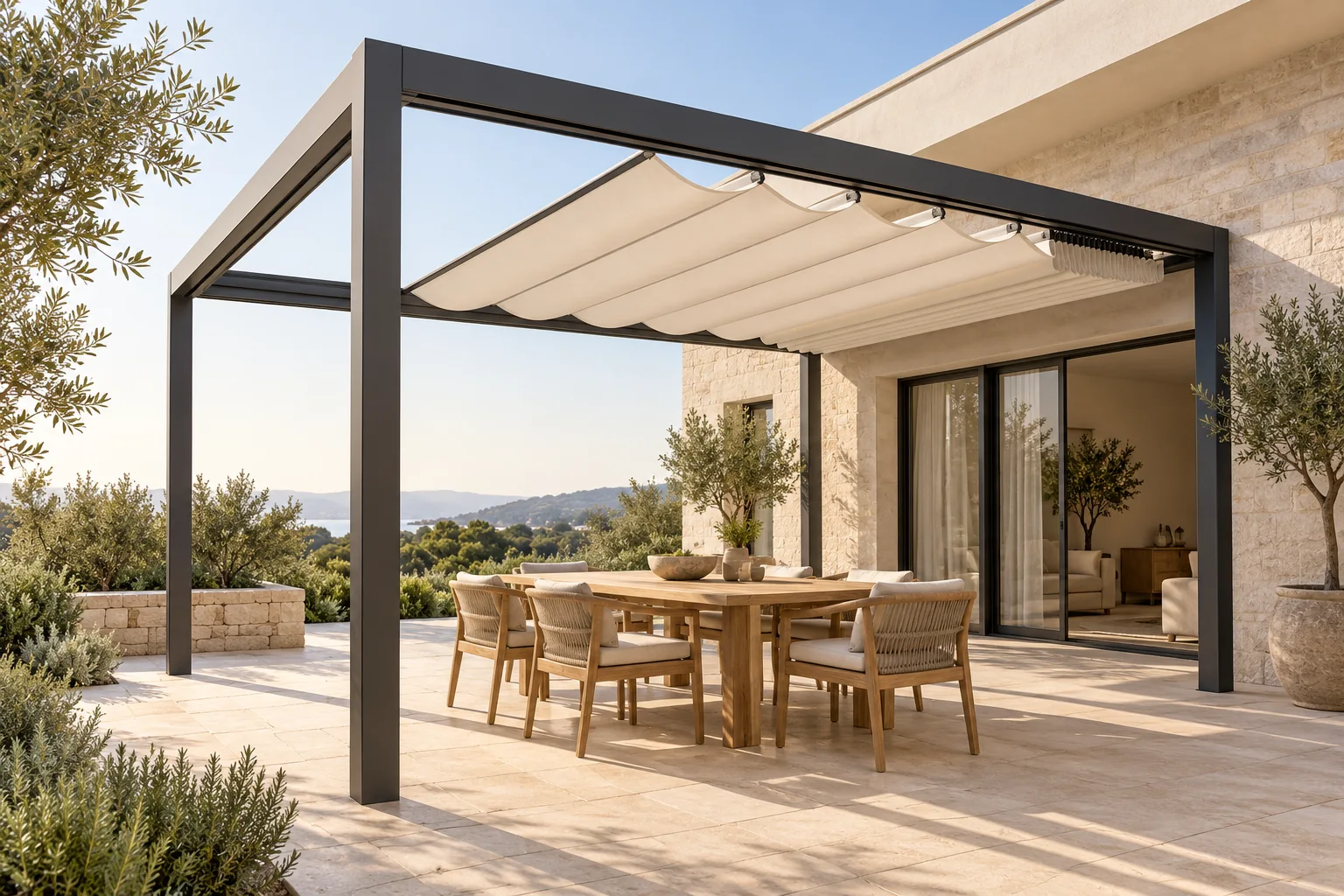









Comparing retractable fabric roof pergola cost starts with identifying where each supplier’s responsibility ends. A supply-only quotation may cover a configured roof system ready for collection or shipment. An installed quotation may also include local delivery, assembly and site work, although the actual inclusions depend on the contractor’s written scope.
For Australian importers, distributors, installers, contractors and project buyers, the useful comparison is the cost of reaching the same agreed outcome. That means checking the product configuration, delivery destination, site assumptions and responsibility for every remaining task. A lower headline quotation can still leave substantial work for the buyer to arrange.
This guide explains how to compare quotation scope, build a landed-cost assessment and identify the work needed to move from delivered goods to an installed, commissioned system.
Quick Answer
To compare supply-only and installed quotations, bring both offers to the same scope. Confirm that they describe an equivalent roof configuration, then identify everything required to deliver, unload, install and hand over the system at the Australian project site.
Treat the assessment as connected stages: the goods, the journey to the nominated delivery point, and the work required on site. Record who supplies each item, who performs each task and which allowances remain subject to confirmation.
A supply-only quote should identify the goods and delivery obligations precisely. An installed quote should explain the installation scope, site assumptions and exclusions just as clearly. Neither label establishes that freight, GST, foundations, electrical connection, approvals or commissioning are included.
Before comparing the totals, obtain written clarification of omissions and provisional items. Confirm applicable charges and requirements with your own freight forwarder, customs broker, licensed electrician and installer.
Why Two Quotes for the Same Pergola Rarely Match
Similar product descriptions can conceal different supply arrangements. A quotation described as a “motorised fabric pergola” may include the aluminium structure, retractable roof, drive equipment and controls. Another may assume that an existing supporting structure is available, or leave mounting brackets and electrical work to others.
Dimensions alone do not establish equivalence. Projection, mounting arrangement, fabric selection, drainage details, finish, controls and accessory choices can change the goods being supplied. An offer based on preliminary dimensions may also change after the supplier reviews drawings or the installer checks the site.
Delivery language creates another source of confusion. A factory collection offer, a shipment to an Australian port and delivery to a project address represent different responsibilities. Even a site-delivered offer may require the buyer to arrange unloading, access equipment and movement from the vehicle to the installation area.
Installed quotations can differ because contractors make different assumptions about the building and site. Accessible mounting points, suitable supporting surfaces and a clear work area may be assumed in one proposal but investigated and expressly included in another.
The practical response is to replace broad descriptions with a written scope. Ask each quoting party to identify what its offer includes, what remains unverified and what would trigger a variation. That gives the buyer a defensible comparison without assuming that a familiar product name represents an identical package.
Supply-Only vs Installed: What Each Quote Should Cover
Supply-only quotations
A supply-only quotation should describe a defined goods package and its delivery basis. It should let the buyer establish what will arrive, where responsibility transfers and what work remains.
Look for a configuration schedule covering the structure where applicable, roof mechanism, fabric, finish, mounting components, drive equipment and controls. Accessories should be identified individually rather than grouped under a vague description such as “standard fittings”.
The quotation should also explain how the goods are supplied. Assembly status matters: components requiring local fabrication, adjustment or assembly create different obligations from a package prepared for the agreed installation arrangement. Ask which drawings, packing lists and installation information accompany the order.
Delivery terms should name the relevant place and make the division of responsibility clear. Confirm the agreed Incoterms rule where used, together with the named location. Ask the freight forwarder to explain how those terms relate to the proposed shipment and destination services.
Supply-only procurement can suit businesses that already coordinate importing and local installation. Its suitability depends on having the capability to manage the remaining work. Include those responsibilities in the comparison even when an internal team will perform them.
Installed quotations
An installed quotation should describe the finished scope and the conditions under which the contractor will deliver it. Ask whether the offer includes site measurement, delivery, unloading, assembly, fixing, adjustment, commissioning and handover.
The supporting structure deserves particular attention. Confirm whether the contractor has assessed it, assumed its suitability or excluded the assessment. Identify who is responsible for foundations, mounting surfaces, structural modifications and any associated professional review.
For a motorised system, distinguish mechanical installation from electrical connection. Ask the contractor to identify the licensed electrician’s scope and whether connection, control setup and commissioning are included or arranged separately. Confirm electrical requirements directly with your own licensed electrician.
An installed quote should also explain how unforeseen conditions are handled. Restricted access, concealed building conditions or changes to the agreed layout may require further work. A useful proposal records these assumptions clearly enough for the buyer to assess the remaining exposure before ordering.
The Cost Components Behind a Landed Price
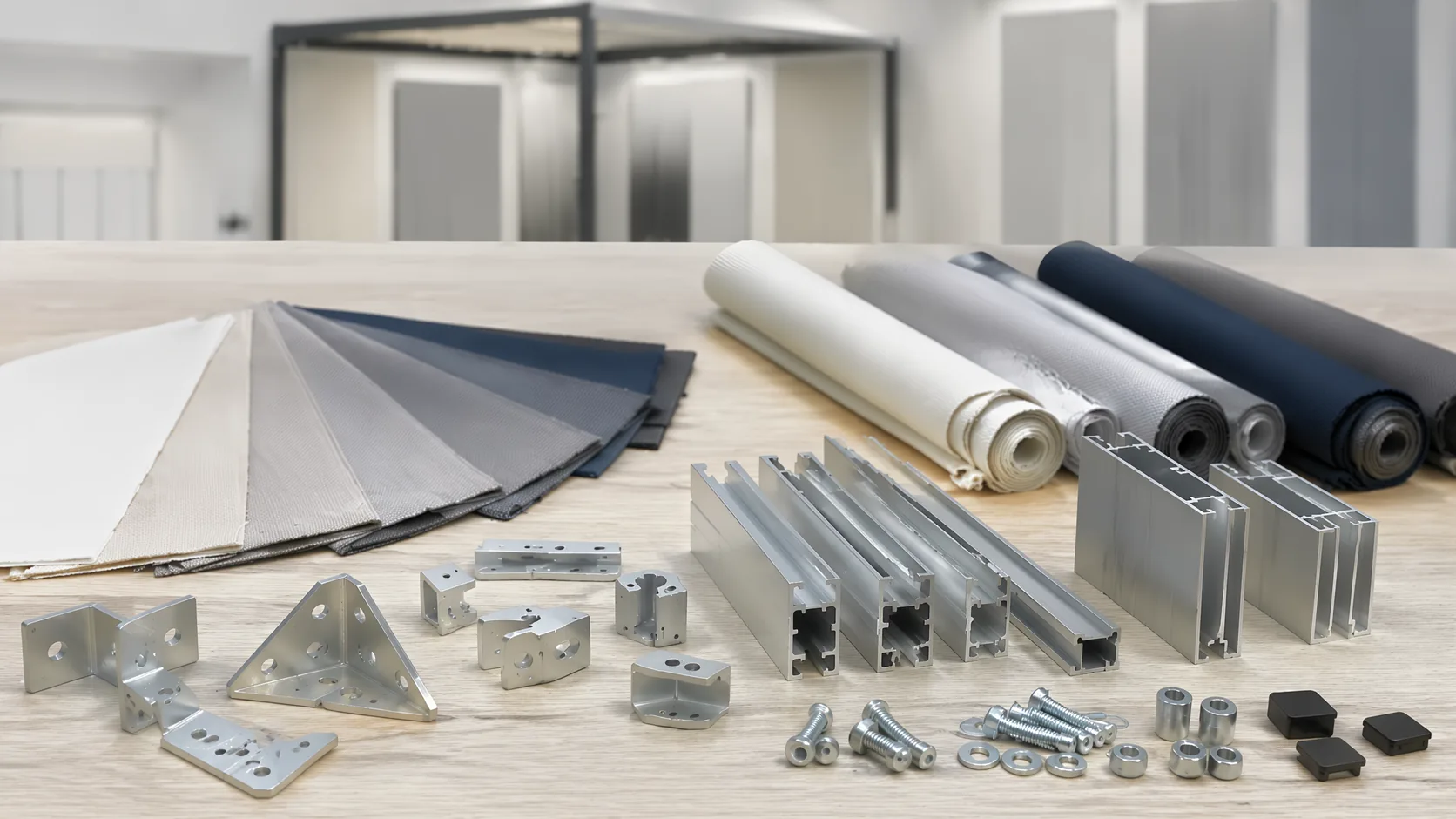
“Landed price” needs a defined destination and scope. It might mean goods available at an Australian warehouse, delivered to a site or received at another nominated location. It should not be treated as equivalent to an installed and commissioned project unless that work is expressly included.
Use the following components to build the assessment:
- Goods and configuration: Record the complete agreed package, including the supporting frame where supplied, fabric roof, mechanism, finish, mounting components, motor, controls and accessories. Confirm whether any items shown in drawings or promotional images are excluded.
- Packing and documentation: Establish the packing method, package information and documents supplied for transport and receiving. Ask whether special handling, project identification or additional documentation is included or requires a separate arrangement.
- International freight: Confirm the shipment basis, origin, destination and services covered. Ask your freight forwarder to assess the proposed cargo details and identify services outside the supplier’s freight scope.
- Duties and import charges: Ask your own customs broker to confirm the applicable treatment and charges for the actual goods and transaction, including GST where relevant. Do not build the assessment around an assumed classification or tax outcome.
- Port, terminal and clearance services: Identify responsibility for destination handling, clearance-related services, cargo release and any inspection-related arrangements. Have your freight forwarder and customs broker confirm which services are included in their quotations.
- Domestic delivery: Define the delivery address, receiving conditions and transport service required. A delivery to a commercial warehouse may involve different arrangements from a delivery to a constrained residential or active construction site.
- Unloading and site handling: Confirm who unloads the vehicle, supplies suitable handling equipment and moves the goods to storage or the work area. Check whether the delivery service ends with the goods still on the vehicle.
- Installation labour and equipment: Identify assembly, fixing, adjustment and handover activities, together with access and lifting equipment where needed. Ask the installer to assess the actual layout and site conditions.
- Structural preparation: Separate the roof-system supply from foundations, supporting steelwork, building alterations and preparation of mounting surfaces. Confirm the assessment and work required with your installer and relevant project professionals.
- Electrical connection and commissioning for motorised systems: Establish who coordinates the licensed electrician, connection, controls and functional checks. Your licensed electrician and installer should confirm their respective responsibilities for the proposed system.
- Approvals and compliance documentation: Identify the documents being supplied and who checks their relevance to the project. Confirm the project’s approval and documentation requirements with the installer and appropriately qualified local advisers.
- Contingency and after-sales: Identify unresolved scope, potential handling complications, spare-parts arrangements and responsibility for service work. Distinguish written supplier support from labour, access and transport that may need separate arrangements.
Rates and requirements vary and must be confirmed with the buyer’s own freight forwarder, customs broker, licensed electrician and installer. Keep confirmed quotations separate from unverified allowances so that the assessment shows where uncertainty remains.
What Usually Sits OUTSIDE the Quote
Exclusions vary, but the boundary between the roof system and the surrounding project is a common source of omissions. Removing an existing awning, repairing a façade, altering a deck or preparing foundations may sit outside the supplier’s package and the installer’s base scope.
Drainage connections also need attention. A quotation may include roof drainage components without including downstream connections, changes to existing drainage or associated building work. Ask the installer to explain the proposed arrangement and identify work by others.
Electrical exclusions can be easy to overlook when the product description includes a motor and remote control. Supplied electrical components do not establish that site connection or commissioning is covered. Confirm the required work with your licensed electrician.
Approvals, project-specific assessments and supporting documentation may also be separate. A supplier’s general product information should not be assumed to resolve every Australian project requirement. Ask what evidence is available and have its suitability reviewed for the intended installation.
Freight-related exclusions may include storage, unsuccessful delivery, additional handling or arrangements arising from access problems. Rather than assuming these events will occur, establish who would organise and pay for them if they do.
Finally, inspect the after-sales boundary. Written product support may leave local attendance, removal, reinstallation or access equipment outside the agreed scope. Clarify the service process and responsibilities before treating competing support offers as equivalent.
Comparing Quotes Like-for-Like

Build a comparison schedule using the same project brief for every quoting party. Mark each item as included, excluded, provisional or awaiting confirmation. Avoid leaving blank cells: a blank can hide an assumption that only becomes visible after the order is placed.
| Comparison point | What to check in a supply-only quote | What to check in an installed quote |
|---|---|---|
| Product configuration | Exact roof type, supplied structure, mechanism and accessories | Installed configuration matches the agreed product schedule |
| Dimensions and layout | Dimensions used for manufacture and responsibility for verification | Site measurement, layout confirmation and treatment of discrepancies |
| Fabric and finish | Identified fabric, aluminium finish and colour selection | Same selections, including any site-applied finishing work |
| Mounting components | Brackets, fixings and interfaces supplied or excluded | Fixing scope and assumptions about supporting surfaces |
| Delivery basis | Agreed delivery terms and named destination | Delivery location, access assumptions and receiving responsibilities |
| Import-related scope | Charges and services included, excluded or left to the buyer | Whether imported supply obligations are covered within the contract |
| GST treatment | Clear statement of the quotation’s treatment for comparison | Clear statement of the quotation’s treatment for comparison |
| Unloading | Party responsible for equipment and unloading | Whether unloading and movement to the work area are included |
| Structural preparation | Required supporting conditions and information available | Assessment, foundations, modifications and exclusions |
| Installation | Assembly information and locally sourced work required | Labour, equipment, fixing, adjustment and handover |
| Motorised operation | Motor, controls and relevant supplied documentation | Licensed electrical work, control setup and commissioning scope |
| Drainage | Supplied components and connection interfaces | Connection work, associated alterations and exclusions |
| Approvals and documents | Documents available for project review | Responsibility for identifying and coordinating project requirements |
| After-sales | Written parts and support arrangements | Local attendance, access, labour and service responsibilities |
Once the schedule is complete, add the separately confirmed work needed to bring each offer to the same endpoint. Keep these additions traceable to a supplier, forwarder, broker or contractor quotation.
Also check for duplication. Domestic delivery may appear in both a freight proposal and an installation offer. Unloading equipment may be allowed for by separate parties. Resolve overlaps before comparing the combined scope.
Where an item remains uncertain, ask for the assumption behind it and the process for confirming it. A fully described provisional item is easier to assess than an apparently complete offer with unstated conditions.
Which System Configuration Changes the Cost Structure
The roof category affects which components, interfaces and installation tasks need comparison. Product terminology can vary between suppliers, so request drawings and an operating description alongside the quotation.
Track-guided fabric roof
A track-guided fabric roof generally uses guided movement along supporting tracks. The quotation should identify the roof-support arrangement, fabric movement, drive mechanism where applicable and relationship between the roof and frame.
Check whether tracks, roof-support members, tensioning components and drainage details form part of the supplied package. Ask how the roof parks when retracted and whether that position affects the usable area or mounting layout.
For cost comparison, focus on the complete system and its interfaces. A roof mechanism supplied for an existing structure has a different scope from a package including a freestanding aluminium frame. The installer should confirm the suitability of the proposed supports and fixing arrangement.
Roller-guided and retracting fabric awning
For a roller-guided or retracting fabric awning, ask the supplier to explain how the fabric rolls, how it is guided and how tension is maintained. Descriptions alone may not reveal whether offers use comparable arrangements.
The quotation should identify the roller assembly, guides, supports, drive equipment and any cassette or protective enclosure included. Mounting brackets and the supporting structure should be addressed separately where their supply is uncertain.
Compare the stated operating conditions and intended application using the supplier’s documentation. Avoid treating all retracting fabric systems as interchangeable, particularly where the project brief includes expectations about weather exposure or water management.
Louvred roof
A louvred roof uses adjustable blades rather than a retracting fabric covering. Its quotation may therefore allocate scope differently across blades, frame, drive components, seals, gutters and controls.
When comparing it with a fabric pergola, check the intended outcome as well as the goods package. The way the roof opens, manages water and occupies the overhead space may differ.
Ask the installer to assess the supporting requirements for the specific proposed system. Do not carry assumptions about foundations, fixing or electrical arrangements from another roof category into the comparison. Each offer needs its own documented configuration and site assessment.
Folding-arm awning
A folding-arm awning commonly projects from a mounting line using extending arms. Its supply package and installation interfaces can differ substantially from those of a pergola with posts and tracks.
Confirm the roller, arms, mounting brackets, enclosure where supplied, fabric and operating equipment. Ask the installer to assess the proposed mounting surface and identify any preparation or additional support.
A folding-arm awning may meet a shade brief differently from a framed roof system. Compare the stated application, operating limitations and coverage arrangement before assessing the quotation. A different scope can explain a different offer without establishing that either product is better suited to the project.
What to Send a Supplier
A useful request for quotation gives the supplier enough information to define the goods and flag unresolved interfaces. It also gives local contractors a consistent basis for assessing delivery and installation.
| RFQ field | Information to provide |
|---|---|
| Buyer and project role | Whether you are importing for distribution, installation, contracting or direct project use |
| Project location | Australian suburb, state and delivery postcode |
| Intended application | Residential, hospitality, commercial or other proposed use |
| Preferred system | Track-guided fabric roof, roller-guided system, louvred roof or folding-arm awning |
| Layout and dimensions | Measured width, projection, mounting height and relevant clearances, with measurement units stated |
| Drawings and photographs | Overall site views, mounting areas, access route and relevant project drawings |
| Supporting arrangement | Proposed freestanding frame, wall attachment or existing structure |
| Fabric and appearance | Preferred fabric characteristics, colour and aluminium finish |
| Operation and controls | Manual or motorised operation and requested control functions |
| Water management | Intended use and information about available drainage interfaces |
| Delivery endpoint | Named warehouse or site, receiving arrangements and unloading capability |
| Installation scope | Tasks your own team will undertake and tasks requiring separate quotation |
| Documentation needs | Documents requested by the installer or relevant project advisers |
| Accessories | Separately identified lighting, screens or other requested additions |
| Quotation breakdown | Goods, packing, transport and other offered services shown separately |
| After-sales expectations | Requested spare-parts information and clarification of service responsibilities |
Distinguish confirmed project information from preferences and preliminary assumptions. Label dimensions that still require site verification, and identify any design decisions awaiting local assessment.
Ask the supplier to return a written inclusion and exclusion schedule with the quotation. Where a requested feature is unavailable or depends on further information, request that it be marked clearly. This helps prevent an omission from being mistaken for acceptance.
Common Cost-Comparison Mistakes
- Comparing different endpoints. A factory collection offer and a completed installation describe different purchases. Bring both to an agreed delivery and completion scope.
- Treating the product name as a specification. Confirm the mechanism, frame, fabric, controls and mounting arrangement through a written schedule and drawings.
- Using roof area as the whole comparison. A per-square-metre description can conceal differences in configuration, access, supports and included services.
- Assuming motorised means electrically complete. Confirm supplied components separately from licensed electrical connection and commissioning.
- Overlooking the supporting structure. Ask the installer to verify what assessment and preparation are required for the proposed location.
- Assuming delivery includes unloading. Confirm the receiving method, equipment and movement of goods into the work area.
- Mixing confirmed charges with guesses. Obtain project-specific confirmation from the relevant freight forwarder, customs broker and local contractors.
- Comparing GST treatment inconsistently. Ask quoting parties to state their treatment clearly and have your own adviser confirm the appropriate comparison basis.
- Counting the same service twice. Reconcile overlapping freight, handling and installation allowances before assessing the total scope.
- Treating missing documentation as a minor detail. Identify what the project team needs and confirm availability before committing to the goods.
- Equating parts support with site service. Establish who handles diagnosis, attendance, access, removal and reinstallation where required.
- Ordering before resolving interfaces. Confirm who owns mounting details, drainage connections, electrical coordination and final site verification.
Related Reading
For broader product selection and supplier assessment, see these related guides:
- Retractable fabric roof pergola buying guide for Australia
- Fabric pergola vs louvred roof vs folding-arm awning
- Patio awning manufacturers in China
Frequently Asked Questions
How should I compare retractable fabric roof pergola cost across suppliers?
Use the same configuration and project brief, then compare written inclusions, exclusions and delivery responsibilities. Add separately confirmed freight, handling and site work until each offer reaches the same agreed endpoint.
Is a supply-only quotation necessarily cheaper than an installed quotation?
A supply-only offer covers a narrower scope when installation is excluded. Whether it produces a lower completed-project cost depends on the remaining transport, preparation, installation and coordination work.
Does landed price include installation?
Only if the quotation expressly includes it. Ask for the destination and covered services to be defined, then record unloading, site handling, installation and commissioning separately where necessary.
Should GST and import charges be included in the comparison?
Their treatment should be clear and consistent across the assessment. Have your own customs broker confirm applicable import-related treatment and charges, and seek advice from your own adviser about the appropriate GST comparison basis.
Does a motorised pergola quote include an electrician?
Do not assume it does. A supplied motor and controls may be separate from site electrical work. Confirm connection and commissioning responsibilities with the quoting contractor and your own licensed electrician.
Can an existing patio or deck support the pergola?
That requires assessment of the actual structure and proposed system. Provide drawings and photographs, then have your installer and relevant project professionals confirm suitability and any preparation required.
What should I clarify before accepting a quotation?
Resolve the product schedule, delivery endpoint, unloading, supporting structure, installation boundaries, electrical responsibilities, documentation and after-sales process. Ask for unresolved items and variation triggers to be recorded in writing.
Closing inquiry call to action
Send Sylvanor your project location, drawings, preferred roof configuration and required supply scope. Request a quotation with clearly stated inclusions, exclusions and delivery terms so your Australian freight forwarder, customs broker and installation team can assess the remaining work.