





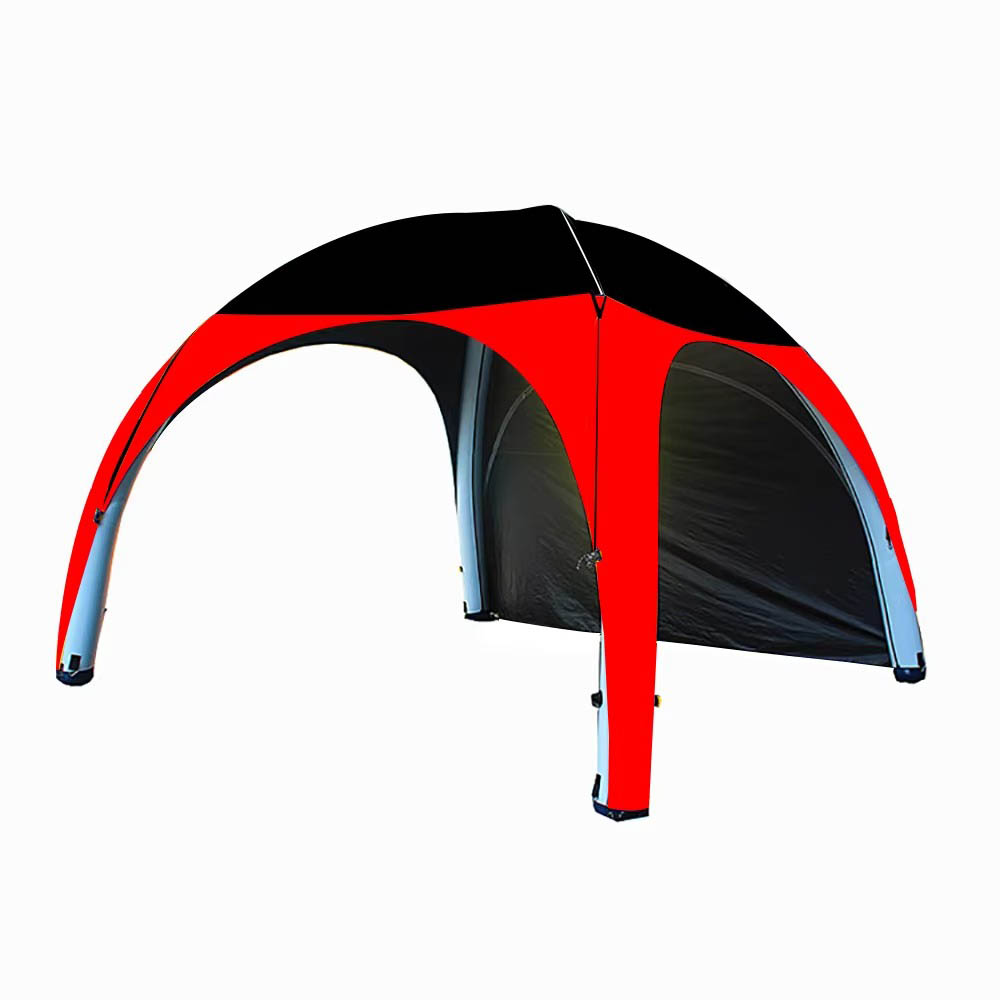
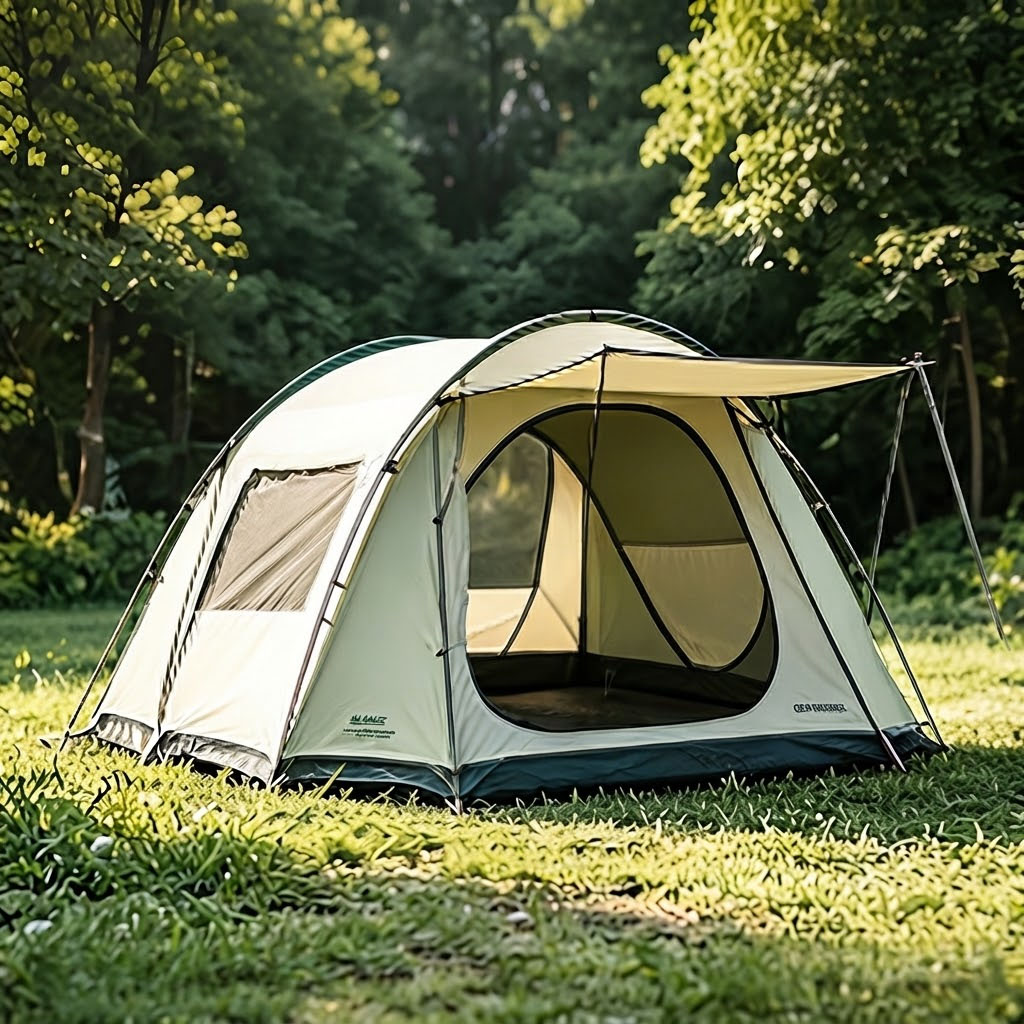
Custom canopy tent sample approval should confirm the agreed configuration and clearly define what is being released. Review the frame, fabric, artwork, sidewalls, accessories and packaging against the specification. Record and resolve relevant differences, then confirm the approved versions in writing before bulk production.
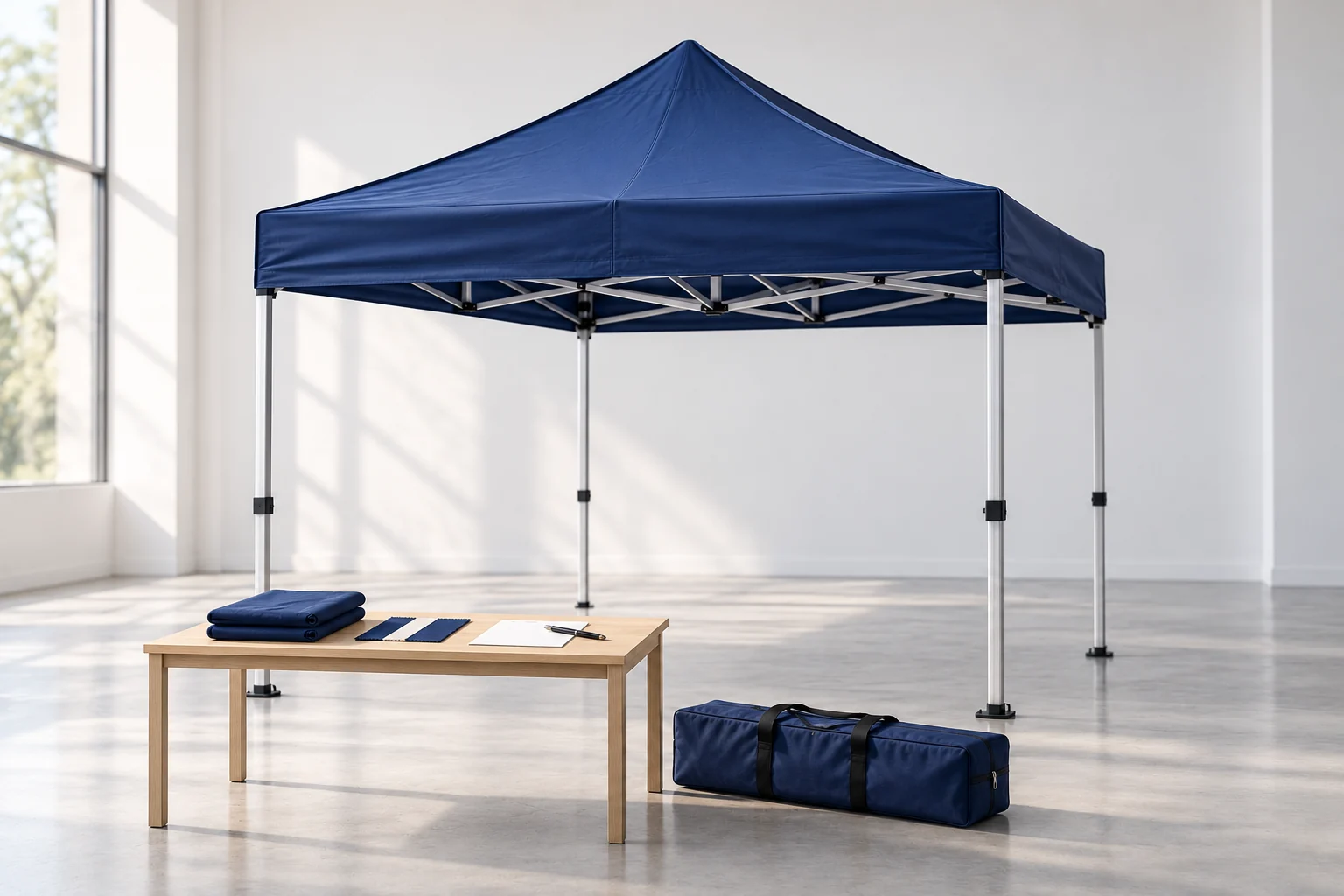
A good-looking sample alone is not enough. The useful question is: Can the supplier reproduce the approved configuration, and can your inspection team verify it?
This checklist is for buyers of custom printed pop-up canopies, including distributors, event suppliers and brand purchasing teams. Use it to turn a physical sample into a clear production reference.
Confirm what kind of sample you are approving
“Sample approved” can mean different things. A signed artwork proof does not approve the frame, and a stock canopy with your logo does not necessarily represent the materials intended for your order.
Ask the supplier to identify the sample type and any differences from the proposed bulk product.
| Sample or proof | What you can review | What it does not establish on its own |
|---|---|---|
| Digital artwork proof | Text, logo placement, panel orientation and layout | Actual printed color, fabric feel or construction |
| Printed fabric swatch or strike-off | Print appearance on the identified material, color reference and finish | Complete canopy fit, frame operation or packing |
| Physical development sample | Proposed design, assembly and areas requiring revision | That every component matches the intended production specification |
| Physical pre-production sample | The configuration proposed as the reference for production | Conformity of every unit in the future batch |
Supplier terminology varies. Ask which material, print process, components and packaging the sample represents, rather than relying on its name.
If the specification is still incomplete, first use the canopy tent RFQ template to agree on the product you intend to buy.
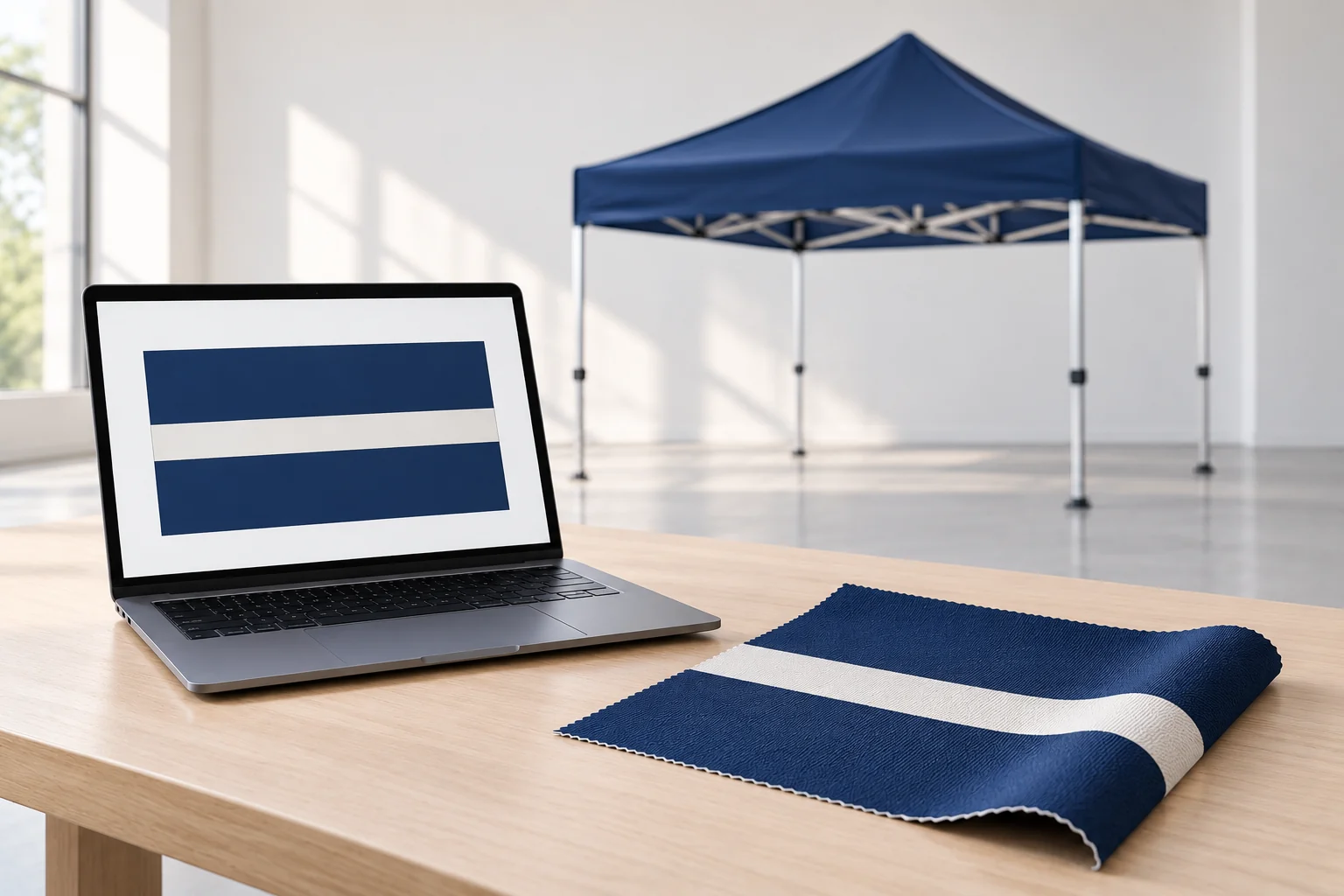
Prepare canopy sample approval documents
Set up one approval record that both sides can identify. It should connect the physical sample to:
- The project or order reference and sample ID.
- The specification and component list, with revision dates or numbers.
- The artwork file and panel layout.
- The packaging and label requirements.
- Any agreed test reports or supporting documents relevant to the product.
- Known sample substitutions, open questions and requested changes.
A photograph is useful, but it is not a substitute for written requirements. For example, a photo may show a white connector without identifying its agreed material or part reference.
For each check, agree on the requirement, any permitted tolerance and the review method. Do not assume a universal tolerance. Record each issue as requirement → observed result → difference → corrective action → status. Include a photo reference when it helps someone locate the issue. This makes “please improve the quality” into an instruction the supplier can act on.
Custom canopy tent sample approval: what to inspect
Assemble the sample using the supplied instructions and the intended accessories. Keep the inspection method consistent with the manufacturer’s guidance; do not improvise loading or severe-weather tests.
Start with the checks below. Record the agreed requirement before entering a result—“looks good” is not a measurable acceptance criterion.
| Area | What to check | What to record |
|---|---|---|
| Frame and dimensions | Specified footprint, height settings, folded size and component configuration | Measurements, reference points and any difference from the specification |
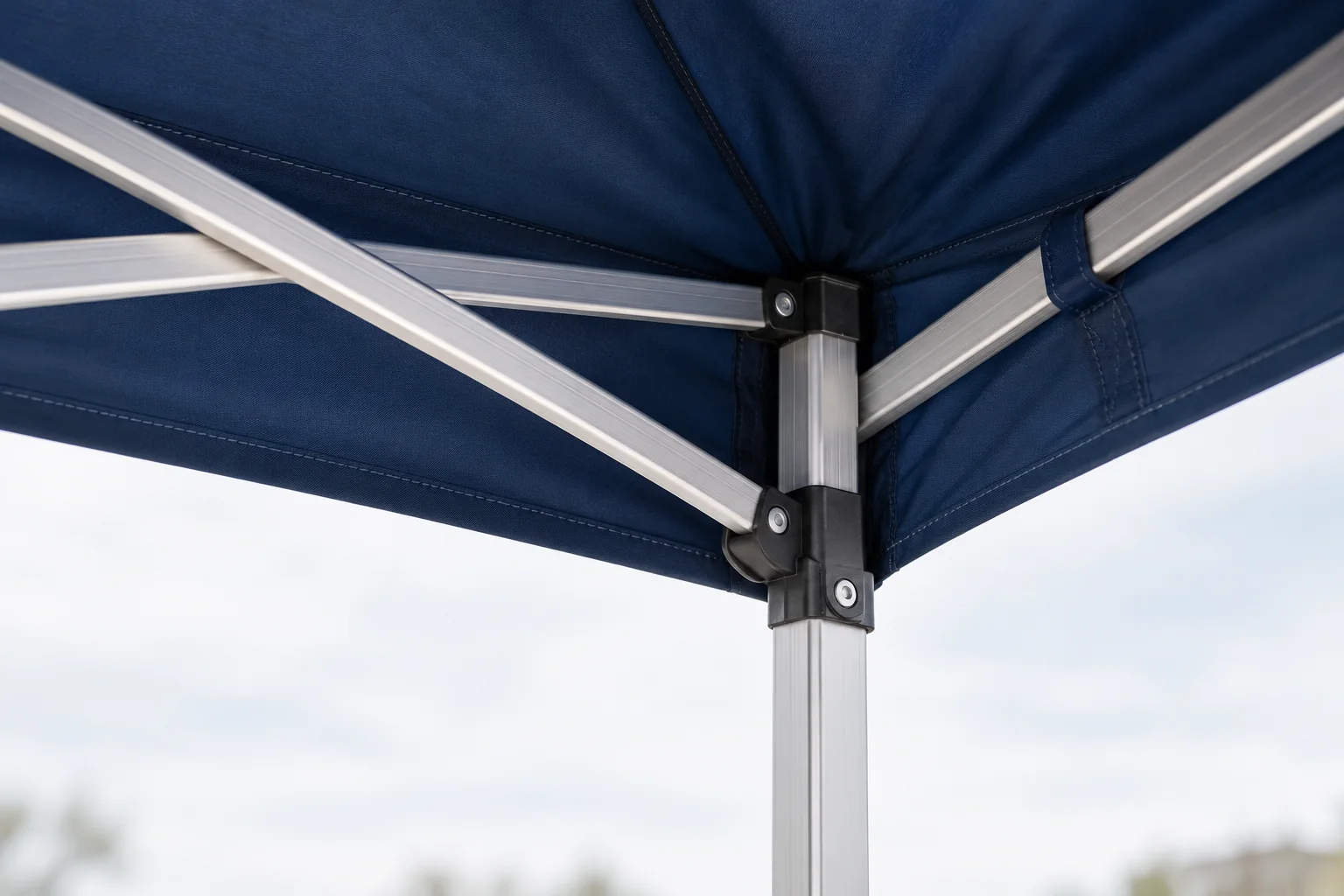
| Joints, locks and finish | Operation during normal setup, visible damage, sharp edges and finish consistency | Location, photo and effect on assembly or use |
| Roof and fabric | Material identification, panel fit, seams, reinforcement and agreed attachments | Material reference, observed condition and unresolved evidence |
| Printed artwork | Text, logo proportions, orientation, placement and approved color reference | Artwork revision, panel identification and comparison result |
| Sidewalls and accessories | Correct types, quantities, compatibility and attachment positions | Component list, fit observations and missing items |
| Packaging and labels | Complete pack-out, protection, bag fit and required markings | Pack-out photos, measured package details and label revision |
Frame, joints and everyday operation
Check that the roof fits the supplied frame and that the intended adjustment positions can be used according to the instructions. Look for misaligned connections, damaged finishes, trapped fabric and components that prevent normal assembly.
Separate an observation from a performance claim. A frame that opens smoothly has passed that particular functional check; it has not thereby demonstrated a wind rating. Record material or structural requirements separately and identify the evidence needed to verify them.
Fabric and print quality
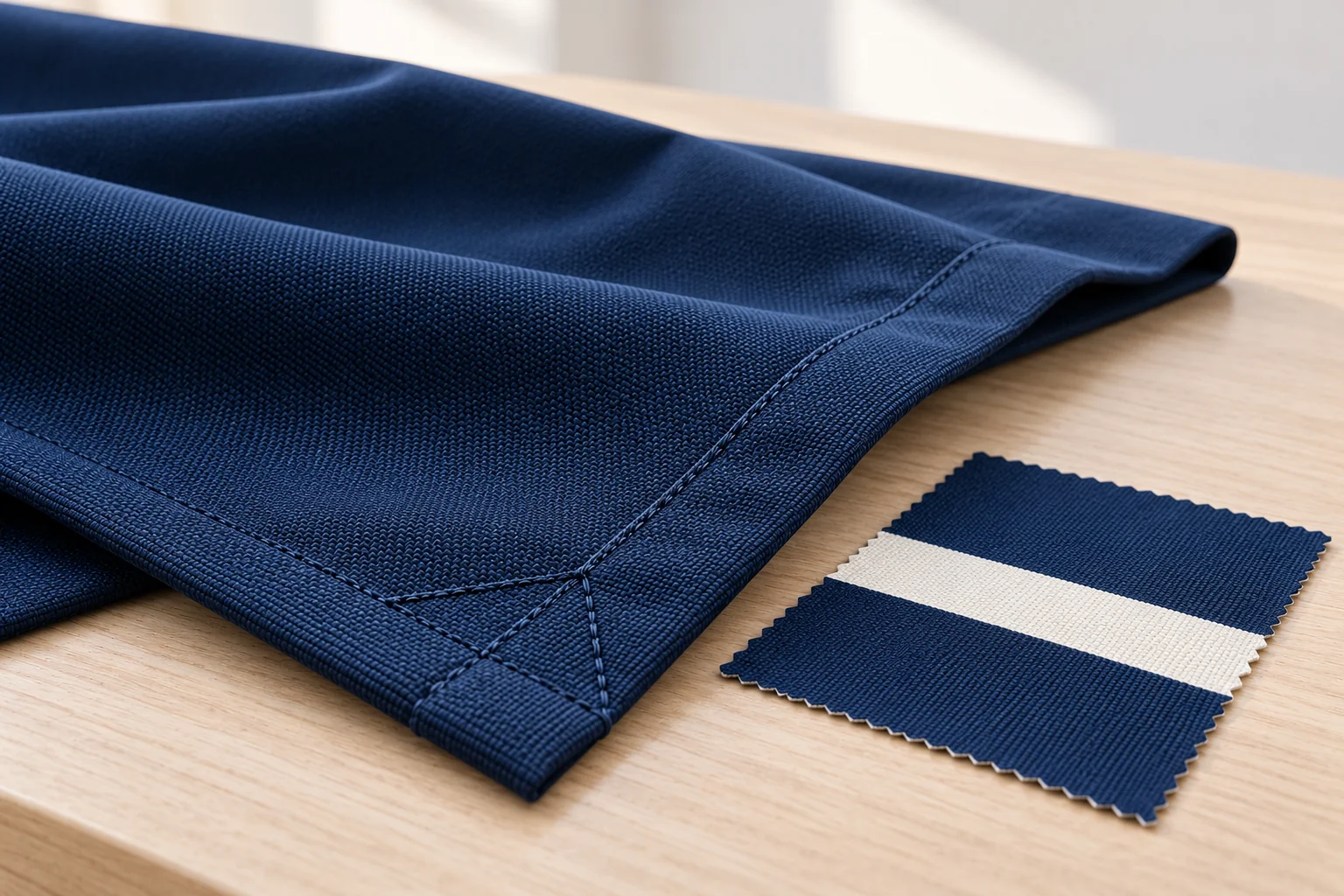
Compare the sample with the specified fabric reference and finishing requirements. Inspect seams, roof corners, reinforcement areas and attachment locations. A visual review can reveal construction differences, but it does not establish waterproof or fire performance. Where those properties matter, review evidence applicable to the identified material, construction and intended market.
For printing, approve more than the logo on a screen. Review spelling, panel direction, logo proportions, print position and appearance on the actual material. CELINA’s artwork guidance explains why screen or PDF colors may differ from printed output.
Agree on the color reference and review conditions before sign-off. If color is important to the brand, request a printed reference on the intended material and identify the print process it represents. Discuss achievable tolerances with the supplier rather than assuming an exact match across different fabrics and processes.
Sidewalls and accessories
Fit the sidewalls to the assembled canopy. Check orientation, closure positions and the connection between the wall, roof and frame. If the order includes half-walls, counters or other fitted parts, inspect their interfaces as a complete configuration.
Count every included item against the component list. A photograph of a bag of accessories is less useful than a record of which parts are included and how they fit. Keep optional accessories separate from the approved order contents.
For anchoring or ballast, follow the product’s applicable instructions and site requirements. A sample approval checklist should not create a universal ballast quantity or weather-use limit.
Check packaging before signing off
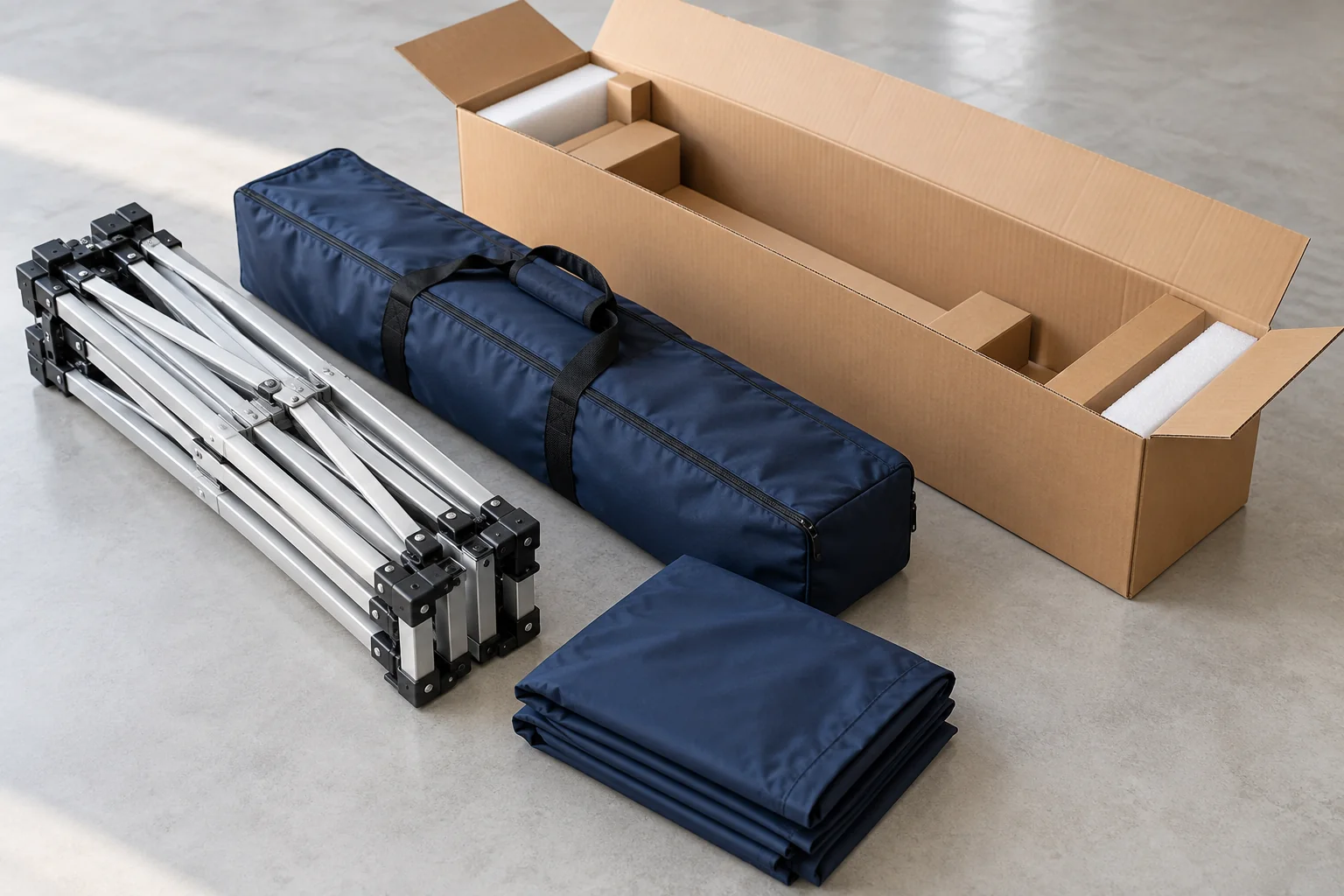
Include the pack-out in your custom canopy tent sample approval, so the agreed contents and packing method are documented together. Pack the approved configuration using the proposed packing method. Confirm that the carry bag accommodates the actual contents and that parts are protected from contact that could damage fabric or finishes.
Check the carton contents, item identification and required labels. Record the measured package dimensions and weight when these are needed for logistics planning; do not carry forward estimates from an earlier configuration without checking them.
If retail presentation, barcodes or destination-specific markings are required, review the actual proposed files and their placement. Do not add certification marks merely because a similar product displays them.
Pack-out photos provide a useful reference. They do not prove that the shipment will withstand distribution conditions. Any required packaging tests should be agreed separately.
Record your canopy sample approval decision
Use clear statuses so that an email such as “the logo looks fine” cannot be mistaken for permission to manufacture the whole order.
| Status | Meaning | Production release |
|---|---|---|
| Approved | The identified scope meets the agreed requirements and relevant open issues are closed | State explicitly whether bulk production is authorized |
| Hold | A question, document or decision remains unresolved | Not authorized for the held scope |
| Revise and resubmit | A change is required and evidence or a revised sample must be reviewed | Not authorized for the affected scope until new approval |
These are proposed working statuses; agree on them with your supplier. You may approve artwork while holding the complete sample, but record those scopes separately.
Example: artwork approved, complete sample on hold
Suppose the printed roof matches the approved layout, but the sample’s sidewall attachment differs from the specified connection.
Record the artwork as approved at its identified revision. Keep approval of the complete configuration on hold. Describe the required attachment, identify who will resolve the issue and agree on the evidence needed for review.
Once the correction is checked, issue an updated decision linked to the revised documents. This is an illustrative example, not a Sylvanor customer case.
Custom canopy tent sample approval record
Use the fields below in your inspection sheet or approval email. Complete them for the actual project rather than sending a general “approved” message.
| Record field | Information to enter |
|---|---|
| Project and sample | Order reference, sample ID and date received |
| Approved configuration | Model or configuration, dimensions and included components |
| Controlled documents | Specification, artwork, component list and packaging revisions |
| Acceptance criteria | Agreed requirements, relevant tolerances and review methods |
| Inspection evidence | Checklist results, photographs and relevant document references |
| Differences and actions | Each deviation, responsible person, required action and closure evidence |
| Decision and scope | Approved, Hold or Revise and resubmit; identify precisely what the decision covers |
| Bulk production release | Yes or No; identify the configuration and document revisions covered |
| Sign-off | Authorized approver, role and approval date |
Where possible, keep the approved sample available as a physical reference. Insight Quality’s guidance on golden samples describes using an approved sample alongside product specifications and an inspection checklist. Those references work together: a sample can show appearance and workmanship, while the documents define requirements that may not be visible.
After pre-production sample approval: inspect the batch
Approval should create a usable reference for the next stage. Give the supplier and any inspection provider the same approved document set, photos and deviation record.
Agree on how later changes will be handled. A proposed material substitution, component change or artwork revision should be identified and reviewed against the approved scope before affected production proceeds. Update the reference documents when a change is accepted.
Plan production checks according to the order’s risks and requirements. QIMA’s initial production check guidance describes reviewing materials and early production against requirements. Later inspection can address the produced goods using the agreed specifications and inspection plan.
The timing, sampling method and acceptance criteria need to suit the order. One approved sample cannot establish that every unit in a production batch conforms.
Frequently asked questions
Can I approve a custom canopy tent from a digital proof alone?
You can approve the defined artwork layout from a digital proof. It does not let you inspect physical fit, frame operation, fabric construction or actual printed appearance. Record artwork approval separately from approval of the complete product.
What if the sample uses a different fabric or component?
Ask the supplier to identify the substitution and explain what it affects. Decide whether that sample can answer the specific question you are reviewing. If the difference prevents you from verifying an important requirement, request suitable evidence or a corrected sample before releasing the affected scope.
Does every revision require a new physical sample?
The review method depends on the change. A text correction may be reviewed in a revised proof; a material, fit or construction change may need a swatch, component or complete sample. Agree on adequate verification and record the decision. Do not assume that a photograph is sufficient for every change.
Does custom canopy tent sample approval replace bulk inspection?
No. Sample approval defines the accepted reference. Production inspection checks goods against that reference and the agreed requirements using the selected inspection plan.
Discuss the sample requirements for your canopy order
Whether you are arranging a sample or reviewing one for approval, prepare your intended use, canopy size, planned quantity, destination market, artwork needs and required delivery date. Include the sample scope, requested changes and points that still need confirmation.
Discuss your sample requirements
Ask for written confirmation of the proposed sample scope, costs, timing and any differences from the intended production configuration. For the wider purchasing process, use the bulk tent sourcing checklist.