



Key Takeaways
- Material Selection: PVC-coated canvas (840D–1000D) balances high tensile strength and weather resistance, offering a commercial lifespan of 5–10 years.
- Compliance Standards: Insist on DIN 4102 B1/NFPA 701 flame retardancy (self-extinguishing within 2 seconds) and ≥10,000 mm H2O hydrostatic pressure.
- Key Craftsmanship: High-frequency hot-air welding (60% stronger seams) and double-layer reinforced corners are critical to preventing tears.
- Customization: Sylvanor leverages 25+ years of experience, 50 advanced machines, and 100 skilled workers with 1000+ developed designs for complete OEM/ODM flexibility.
- Procurement Checklist: Avoid recycled PVC and fake denier ratings by requesting third-party test reports, physical fabric swatches, and anti-corrosion frame treatments.
In commercial event leasing, outdoor trade shows, and sports event management, procuring premium canopy structures represents a significant long-term capital investment. The core factor determining return on investment (ROI) and site safety is the quality of the heavy-duty, flame-retardant, and waterproof fabric used. Selecting substandard materials leads to frequent leaks, fabric tears, and unacceptable safety risks during sudden severe weather or fire hazards.
As an experienced commercial tent supplier with over 25 years of manufacturing expertise, Sylvanor combines extensive R&D, advanced production practices, and empirical laboratory data to provide an in-depth analysis of commercial canopy materials. This guide outlines key durability metrics and material selection strategies to help global buyers make precise, informed decisions.
Comparison of 4 Main Commercial Canopy Materials
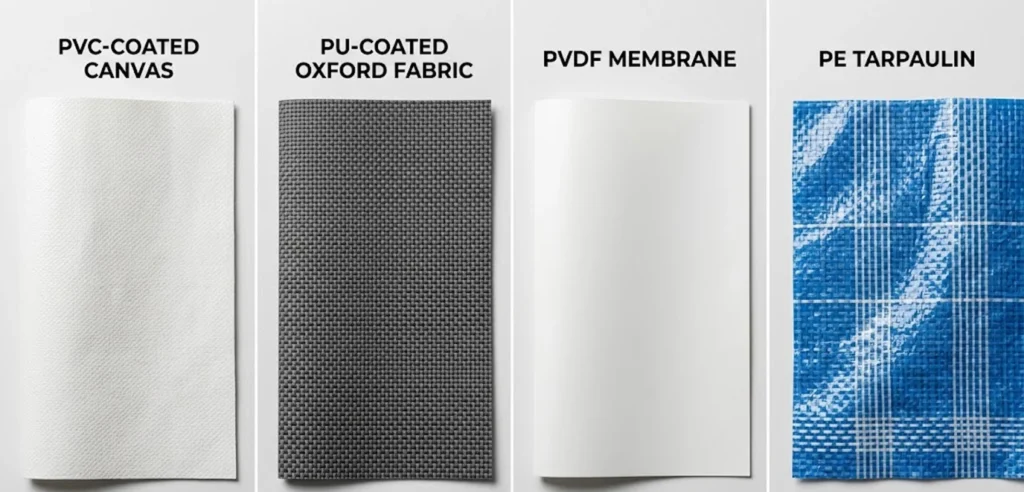
Commercial event structures require exceptional physical strength and weather endurance. The market primarily features four main canopy materials: PVC-coated canvas, PU-coated Oxford fabric, PVDF membrane, and PE tarpaulin.
According to technical reports from the Industrial Fabrics Association International (IFAI), a fabric’s base weave density and polymer coating technology dictate its tear resistance and anti-aging ceiling. Sylvanor laboratory stress testing demonstrates the physical differences across these materials:
| Material Type | Standard Spec / Denier | Tensile Strength (ISO 1421) | Hydrostatic Head (ISO 811) | Flame Retardancy Standard | Expected Commercial Lifespan |
| PVC-Coated Canvas | 840D – 1000D | ≥ 3000 N / 5cm | ≥ 10,000 mm H2O | DIN 4102 B1 / NFPA 701 | 5 – 10 Years |
| PU-Coated Oxford | 420D – 600D | ≥ 1800 N / 5cm | ≥ 5,000 mm H2O | CPAI-84 | 2 – 4 Years |
| PVDF Membrane | 1100D + Surface Coating | ≥ 4000 N / 5cm | ≥ 12,000 mm H2O | B1 / M2 | 10 – 15 Years |
| PE Woven Tarp | 140g – 200g/㎡ | ≥ 800 N / 5cm | ≥ 2,000 mm H2O | Basic / None | 1 – 2 Years |
Testing proves that PVC-coated canvas provides the ideal balance among cost, heavy-duty durability, and flexibility. Its core utilizes high-tenacity polyester filament woven into high-denier base fabric (840D or 1000D), coated on both sides with polymer PVC resin via knife-coating or lamination. This construction prevents water penetration and withstands heavy winds, making it the top fabric choice for any wholesale commercial tent project.
💡 Frequently Asked Questions
Q: Which heavy-duty waterproof fabric offers the longest lifespan for commercial use?
A: PVC-coated canvas offers the best performance. Its outstanding anti-mildew, UV-resistant, and flame-retardant properties deliver a reliable lifespan of 5 to 10 years under high-frequency commercial deployment.
Factory-Grade Flame Retardancy and Waterproofing Standards
Commercial canopies operate in high-density public venues such as exhibitions, corporate gatherings, and outdoor festivals. Consequently, compliance certifications are non-negotiable quality metrics. High-grade commercial fabrics must meet globally recognized flame retardancy standards and high-pressure waterproofing metrics.
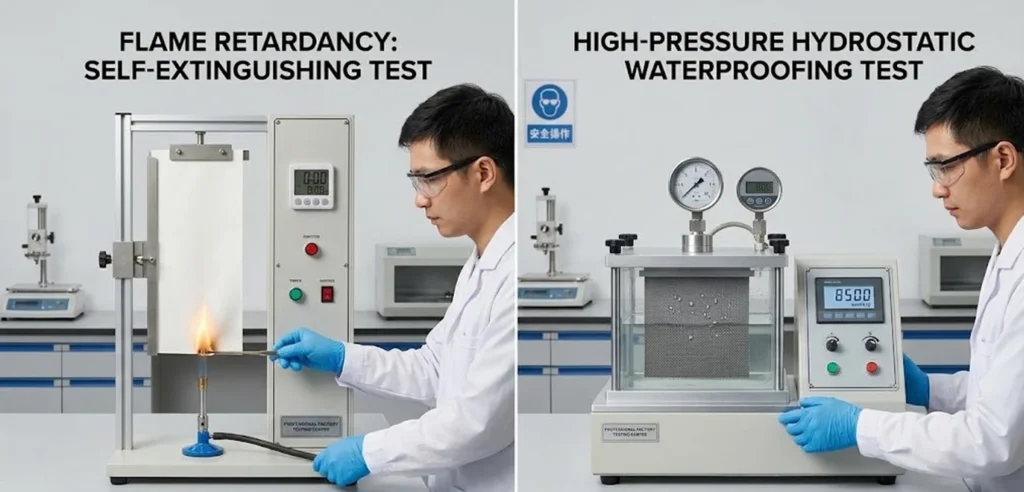
Regarding fire safety, Sylvanor commercial fabrics adhere strictly to German DIN 4102 B1 and US NFPA 701 specifications. Compliant flame-retardant fabric features self-extinguishing capabilities (self-extinguishes within ≤ 2 seconds after flame removal) and produces no flaming droplets, preventing fire propagation.
For waterproofing and weather resistance, evaluation relies on ISO 811 hydrostatic pressure testing and ASTM G154 accelerated weathering testing:
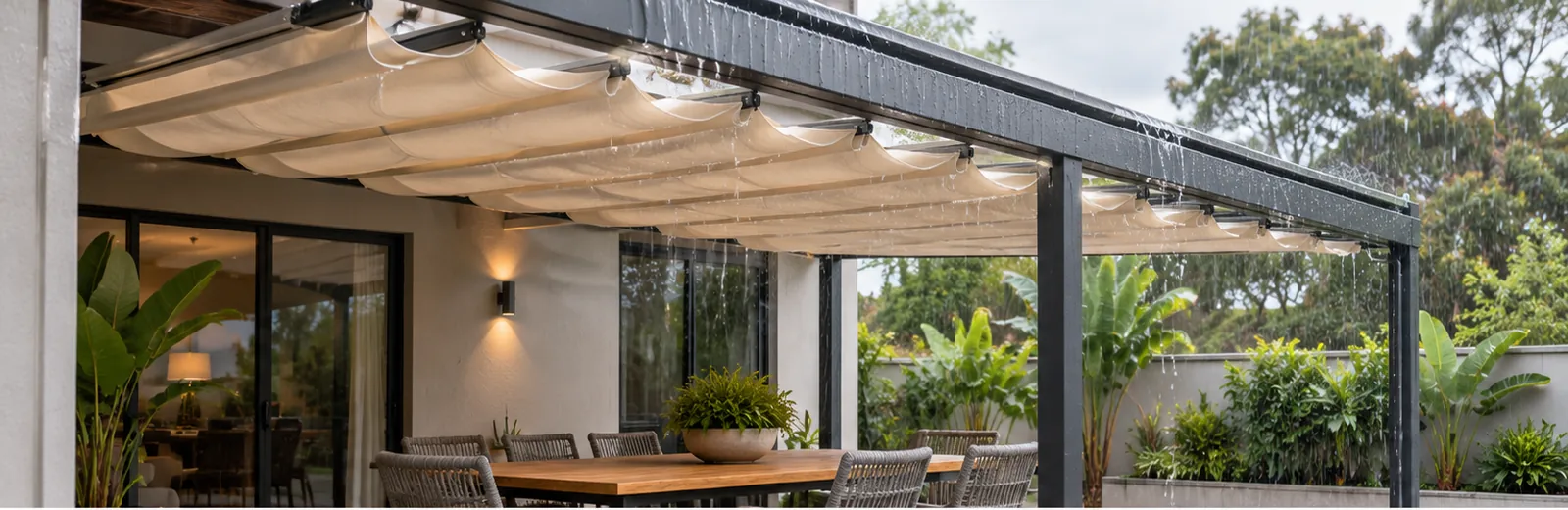
- High-Pressure Waterproofing: Commercial-grade PVC fabric withstands hydrostatic pressure exceeding 10,000 mm H2O, preventing leaks under torrential rain or standing water.
- UV Resistance: Incorporating high-efficiency UV inhibitors into the PVC resin ensures that after 3000 hours of intense UV exposure under ASTM G154 standards, the fabric retains over 85% of its original tensile strength without yellowing or chalking.
As one of the industry’s leading commercial tent manufacturers, Sylvanor subjects every batch of commercial fabric to rigorous high-pressure water spray and tensile testing at our factory QC center.
💡 Frequently Asked Questions
Q: How can buyers verify if a commercial tent fabric meets flame retardant standards?
A: Compliant commercial fabrics must hold official DIN 4102 B1 or NFPA 701 test certifications. In testing, the material must self-extinguish within 2 seconds after fire removal without emitting flaming droplets.
Practical Steps to Extend Commercial Canopy Lifespan
Beyond selecting premium raw materials, precise processing techniques and proper maintenance govern actual service life. Canopy damage often originates at stitched seam tears or water-pooling stress points rather than center-panel fabric failure.
Based on Sylvanor manufacturing records and field feedback, these three practical guidelines significantly extend equipment life:
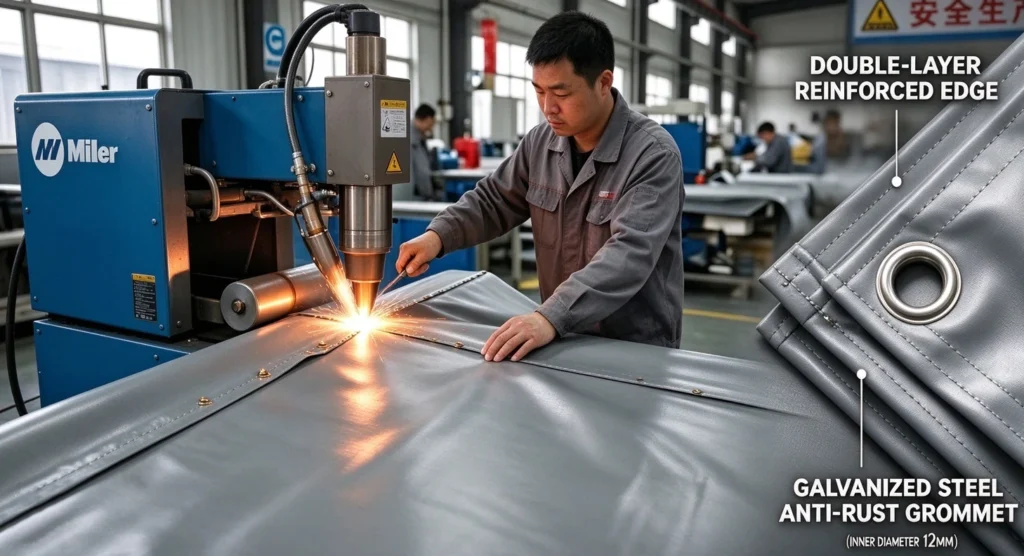
- Use High-Frequency Hot-Air Welding Instead of Traditional StitchingTraditional machine needles leave continuous micro-perforations that weaken the fabric and leak under tension. Sylvanor utilizes high-frequency hot-air welding technology to fuse PVC molecules at high temperatures and pressures. Seam tensile strength increases by 60%, achieving 100% pinhole-free waterproofing.
- Double-Layer Reinforcement at Stress Points and CornersCanopy corners, top peaks, and tie-down grommet areas experience concentrated mechanical stress. Custom orders should specify double-layer reinforced PVC patches at these zones, paired with galvanized or stainless steel grommets to prevent tearing during Gale Force 7-8 winds.
- Standardize Cleaning and Dry Storage WorkflowsCommercial operations leave mud, salt, and acidic rain residues on fabric surfaces. Clean canopies using mild neutral detergents and soft brushes, ensuring the fabric is completely dry prior to folding and storage. Storing damp fabric encourages mildew growth and accelerates coating delamination.
💡 Frequently Asked Questions
Q: How can buyers solve the issue of canopy corner tearing?
A: Specify double-layer edge reinforcements and high-frequency hot-air welding during procurement. Utilizing heavy-duty double-sided PVC coating at stress points boosts tear resistance by over 60%.
Custom Commercial Canopy Solutions from a Direct Factory
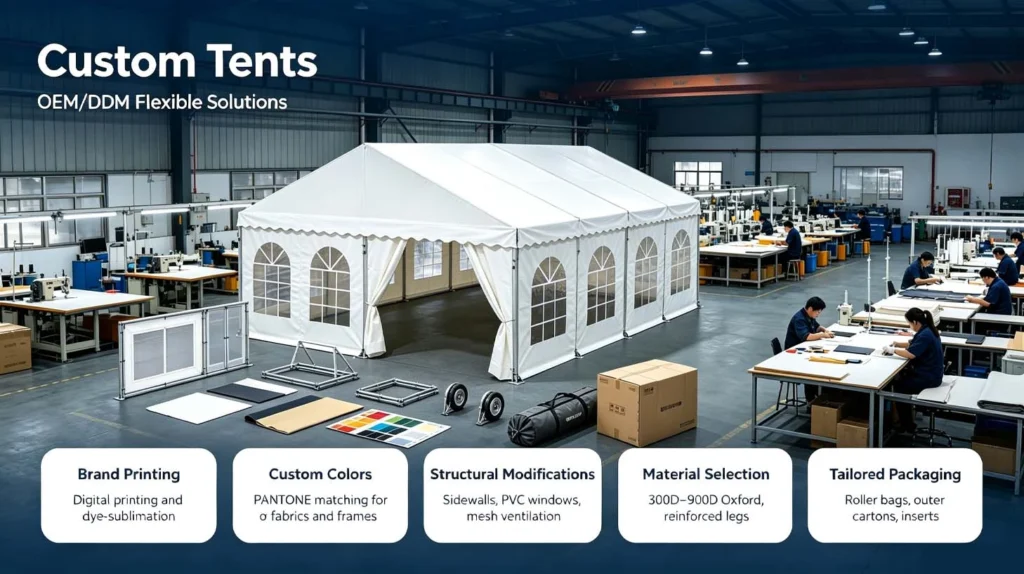
Different commercial applications demand tailored structural setups and visual designs. Event rentals require corporate branding and custom colors, exhibitions require clear-span interior spaces, and temporary warehousing demands reinforced, wear-resistant fabrics. As a direct-factory wholesale commercial tent manufacturer, Sylvanor delivers full-scope OEM/ODM engineering support.
Sylvanor operates a state-of-the-art facility backed by 25+ years of manufacturing history, 50 advanced automated machines (including CNC cutters, high-frequency welders, and automatic grommet setters), and 100 skilled production workers. Our engineering team has created over 1000 custom canopy designs, spanning event structures, pop-up canopies, and luxury commercial glamping units.
Sylvanor provides comprehensive, flexible customization across multiple dimensions:
- Branding & Visuals: High-precision screen printing and digital inkjet printing accurately render corporate VI color schemes and logos.
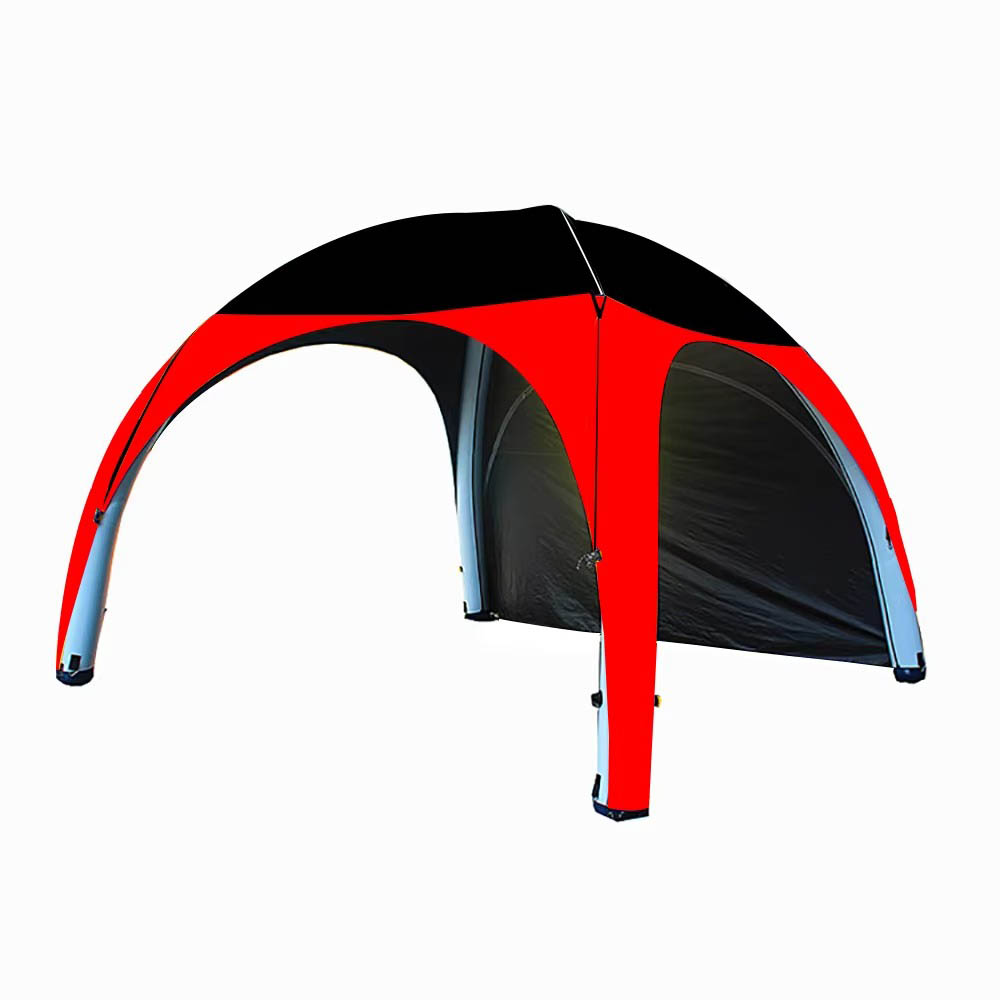
- Dimensions & Structures: Custom clear-span widths and eave heights accommodate specific site footprints, available in quick-deploy, modular, or inflatable structures.
- Functional Materials: Base weaves ranging from 500D to 1000D, specified flame retardancy ratings (B1/M2), anti-mildew treatments, anti-static properties, and self-cleaning PVDF surface coatings.
- Modular Packaging: Heavy-duty wheeled transport bags and reinforced export cartons meet diverse international logistics and wholesale distribution needs.
💡 Frequently Asked Questions
Q: What customization options do commercial tent factories support?
A: Direct factories offer comprehensive OEM/ODM services, including brand logos, specialized color matching, dimensional sizing, structural features, functional fabrics (such as heavy-duty flame-retardant canvas), and custom export packaging.
Procurement Pitfalls to Avoid for Commercial Canopies
Navigating cross-border procurement for a wholesale commercial tent order involves avoiding hidden material downgrades and compromised craftsmanship behind unusually low quotes.
To safeguard capital investments and brand reputation, Sylvanor highlights three common procurement traps and countermeasures:
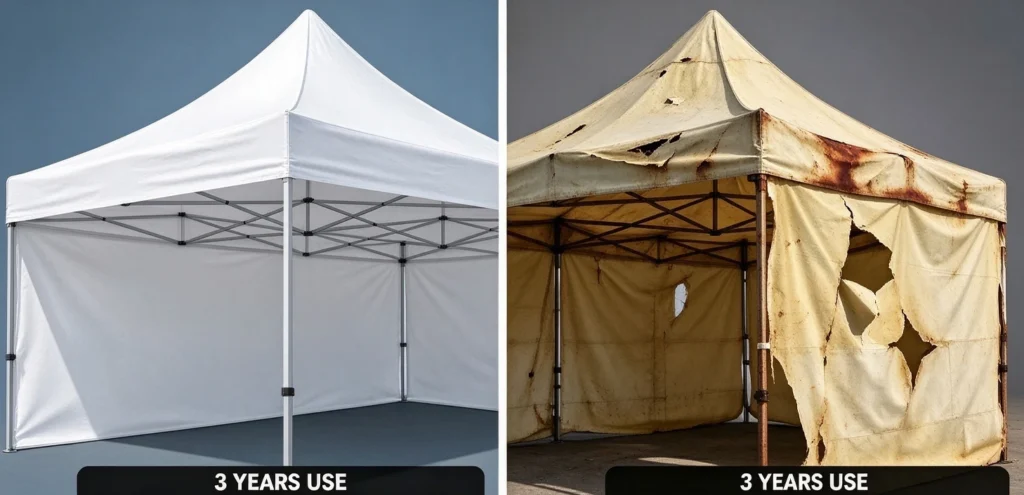
- Trap 1: Use of Recycled PVC ResinSubstandard factories cut costs by mixing recycled PVC waste into surface coatings. While appearing identical when new, these fabrics harden, crack, and emit foul chemical odors within 3–6 months of solar exposure. Countermeasure: Require suppliers to provide RoHS/REACH environmental compliance certificates and verify flex-fatigue test data.
- Trap 2: Exaggerated Fabric Denier RatingsSome suppliers label 420D or 600D Oxford fabrics as 840D or 1000D. Inadequate weave density results in permanent fabric stretching under wind loads. Countermeasure: Request physical production swatches before mass production and insist on independent ISO 1421 tensile strength test reports.
- Trap 3: Unprotected Frame TubingFocusing solely on fabric while ignoring structural tubing is dangerous. Untreated iron or non-anodized aluminum frames rust quickly in humid conditions, staining and degrading the canopy fabric. Countermeasure: Partner with a reliable commercial tent supplier that uses high-strength 6063-T5 aluminum alloy (anodized or powder-coated) or hot-dip galvanized steel tubing.
💡 Frequently Asked Questions
Q: How can buyers avoid inferior fabrics when sourcing commercial canopies?
A: Request factory test reports (such as ISO hydrostatic pressure and flame retardancy certificates), verify base fabric denier (840D/1000D), and conduct physical flex and thickness tests on material samples.