


Key Takeaways
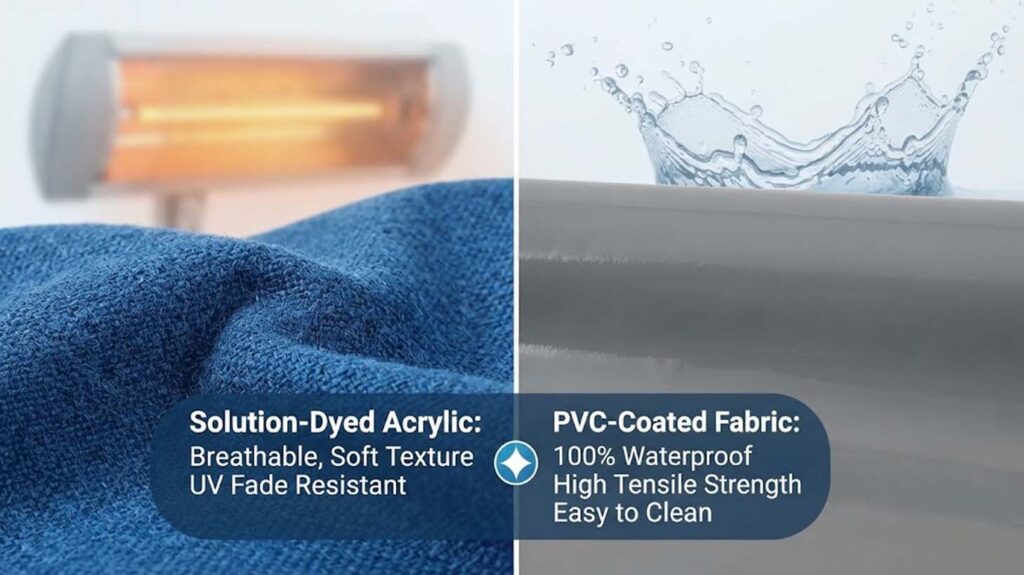
- Material Selection Drives Performance: Solution-dyed acrylic offers superior color fastness and breathability, while PVC-coated fabrics provide 100% waterproof protection and higher tensile strength for severe weather conditions.
- Application-Specific Sourcing: High-end hospitality, retail, and dining storefronts benefit from soft-touch acrylics, whereas heavy commercial hubs, industrial zones, and wet climates rely on industrial-grade PVC fabrics.
- Comprehensive Manufacturing Expertise: Partnering with experienced canvas awning manufacturers like Sylvanor ensures custom fabric selection, precision heat-welding, robust frame engineering, and reliable B2B OEM/ODM production scalability.
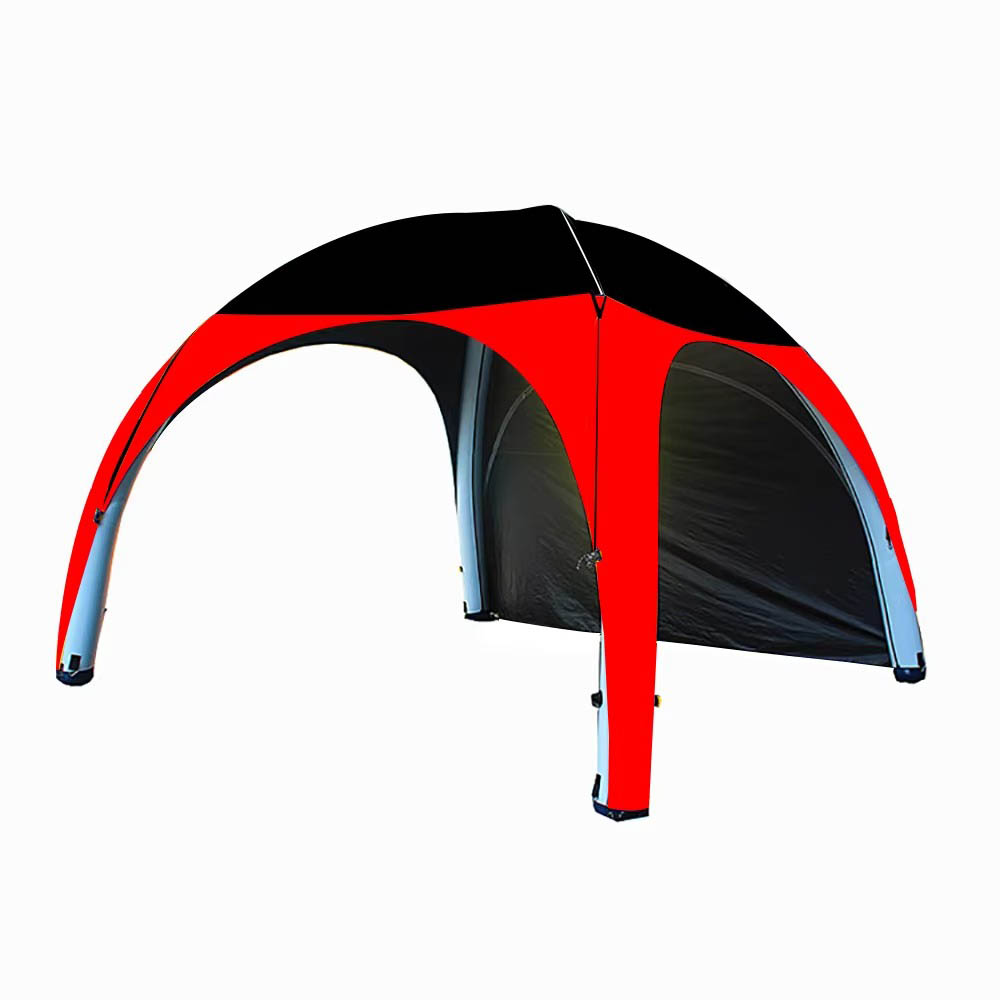
Selecting the right commercial awning fabric directly impacts a business’s exterior aesthetics, brand visibility, and structural longevity. When sourcing custom made canvas awnings, procurement officers and commercial architects must balance durability, water resistance, UV protection, and long-term maintenance costs. Premium solution-dyed acrylic and high-tenacity PVC-coated fabric represent the two dominant materials in the commercial shading market. As leading canvas awning companies recognize, choosing between these materials depends on climate requirements, brand positioning, and daily operational stresses. This guide examines the technical distinctions, field performance, and sourcing considerations to help business buyers make informed commercial fabric investments.
Acrylic vs PVC Fabric Performance Comparison
Evaluating fabric performance requires analyzing raw material composition and manufacturing processes. Solution-dyed acrylic embeds color pigments directly into the liquid polymer core prior to yarn extrusion, locking in hue stability. Conversely, PVC-coated fabric encapsulates a high-tenacity polyester mesh within liquid vinyl layers to construct a dense, non-porous synthetic membrane.
| Technical Metric | Solution-Dyed Acrylic | PVC-Coated Fabric |
| Base Weight Range | 290 – 320 g/m² | 550 – 850 g/m² |
| Color Fastness (ISO 105-B02) | Grade 7-8 (Highest) | Grade 4-5 |
| Hydrostatic Head Water Resistance | > 350 – 1,000 mm H₂O | > 10,000 mm H₂O (100% Waterproof) |
| Tensile Strength (Warp/Weft) | ~1,400 N / 1,000 N per 5 cm | ~2,800 N / 2,500 N per 5 cm |
| Temperature Tolerance | -20°C to +70°C | -30°C to +70°C |
| Surface Finish & Texture | Soft, woven textile appearance | Smooth, glossy or matte vinyl |
The primary functional trade-off for custom made canvas awnings centers on microclimate management versus absolute fluid barrier strength:
- Micro-Heat Dissipation: Acrylic’s woven structure permits warm air to escape through the canopy, reducing ambient temperatures underneath by up to 20%.
- High-Pressure Impermeability: Smooth vinyl coatings repel industrial pollutants and withstand continuous torrential rainfall without liquid seepage.
💡 Frequently Asked Questions
Q: What is the main difference between solution-dyed acrylic and PVC-coated fabric for commercial awnings?
A: Solution-dyed acrylic is a breathable woven textile where color pigments are embedded into the fiber core before extrusion, offering superior fade resistance and a soft aesthetic. PVC-coated fabric consists of a polyester mesh coated with vinyl, offering 100% waterproof protection, higher tensile strength, and easier surface cleaning.
Commercial Awning Fabric Selection Guide
Procurement managers working with professional canvas awning companies must match fabric mechanical capabilities to specific commercial environments:
| Commercial Application | Recommended Fabric Choice | Key Material Selection Factors |
| Boutique Retail & High-End Hotels | 300 g/m² Solution-Dyed Acrylic | Premium texture, rich color depth |
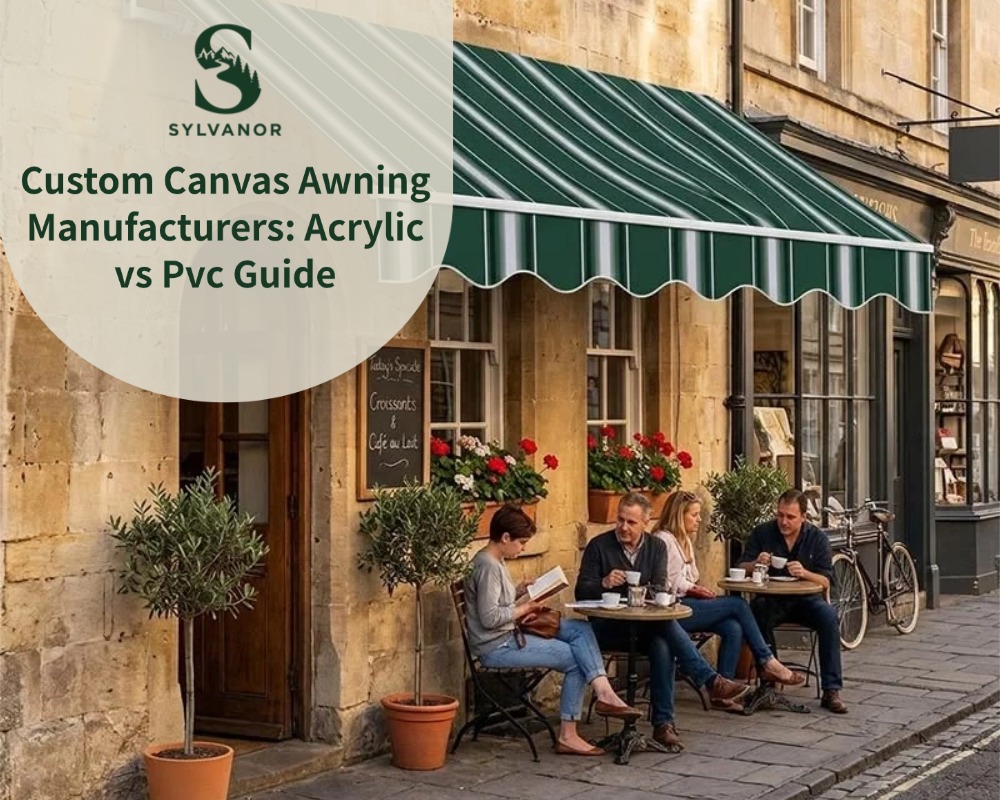
| Sidewalk Cafes & Restaurants | 310 g/m² Water-Resistant Acrylic | Breathability, heat reduction |
| Coastal & High-Humidity Resorts | Treated Acrylic with Anti-Mildew | Saltwater resistance, UV stability |
| Industrial Loading Docks | 650 g/m² Heavy PVC-Coated Fabric | Tear resistance, heavy rainfall |
| Permanent All-Weather Walkways | 750 g/m² PVDF-Lacquered PVC | Flame retardancy, easy cleaning |
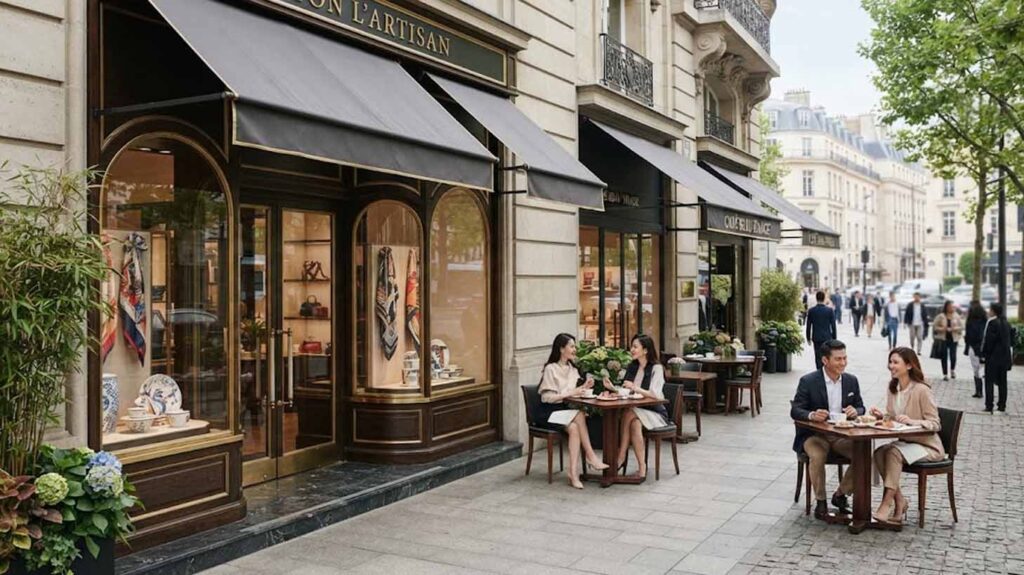
- Commercial Frontages & Hospitality: Premium retail stores and dining terraces prioritize soft-touch solution-dyed acrylics to maintain brand luxury while providing comfortable outdoor shading.
- Logistics & Industrial Facilities: Transport centers and loading docks mandate high-mass PVC-coated canvas that supports hot-air seam welding for wide-span, leak-proof structural coverage.
- Coastal & Tropical Deployments: Salt-spray environments require marine-grade acrylics to prevent surface embrittlement, whereas high-humidity tropical zones require PVC canvas with specialized anti-chalking UV additives.
💡 Frequently Asked Questions
Q: What fabric weight should commercial buyers choose for outdoor awnings?
A: For luxury storefronts, dining venues, and general commercial shade, 290 to 320 g/m² solution-dyed acrylic provides optimal weight, drape, and breathability. For heavy-duty industrial covers, continuous exposure walkways, or wet climates, 550 to 750 g/m² PVC-coated fabrics offer the required tear strength and waterproof performance.
Wind and UV Resistance Analysis
Outdoor commercial canopies are subjected to severe environmental forces. Leading canvas awning manufacturers deploy standardized test protocols like ISO 105-B02 and ASTM D5034 to verify material limits.
| Engineering Metric | Acrylic Testing Standard | PVC Testing Standard |
| UV Protection Factor (UPF) | UPF 50+ (Blocks 98% UV Rays) | UPF 50+ (Blocks 99% UV Rays) |
| Light Fastness Scale (1-8) | Grade 7-8 (5-8 Year Anti-Fade) | Grade 4-5 (3-5 Year Anti-Fade) |
| Flame Retardancy Compliance | NFPA 701, CPAI-84, Class 1 | DIN 4102 B1, NFPA 701, B1 Standard |
| Wind Shear Resistance Rating | Beaufort Scale Class 2-3 (Framed) | Beaufort Scale Class 3-5 (Welded) |
Key engineering factors determining long-term canopy survival include:
- Solar Radiation Resistance: Solution-dyed acrylics inherently block up to 98% of harmful UV radiation, preserving fiber integrity and color hue for 8 to 10 years.
- Structural Tensile Response: Heavy PVC fabrics exceed 2,500 N / 5 cm tensile limits to withstand Beaufort Force 8–10 wind shears without tearing, whereas acrylics offer elastic flex suited for tensioned retractable arms.
- Building Code Compliance: While acrylics require chemical topcoats to meet NFPA 701 flame standards, PVC fabrics incorporate fire-retardant additives directly into the polymer matrix during production to achieve strict DIN 4102 B1 ratings.
💡 Frequently Asked Questions
Q: How do commercial awning fabrics achieve a UPF 50+ sun protection rating?
A: High-density weaving combined with UV-absorbing chemical treatments or built-in vinyl polymer compounds prevents ultraviolet radiation from passing through the weave, blocking 98% to 99% of UVA and UVB rays.
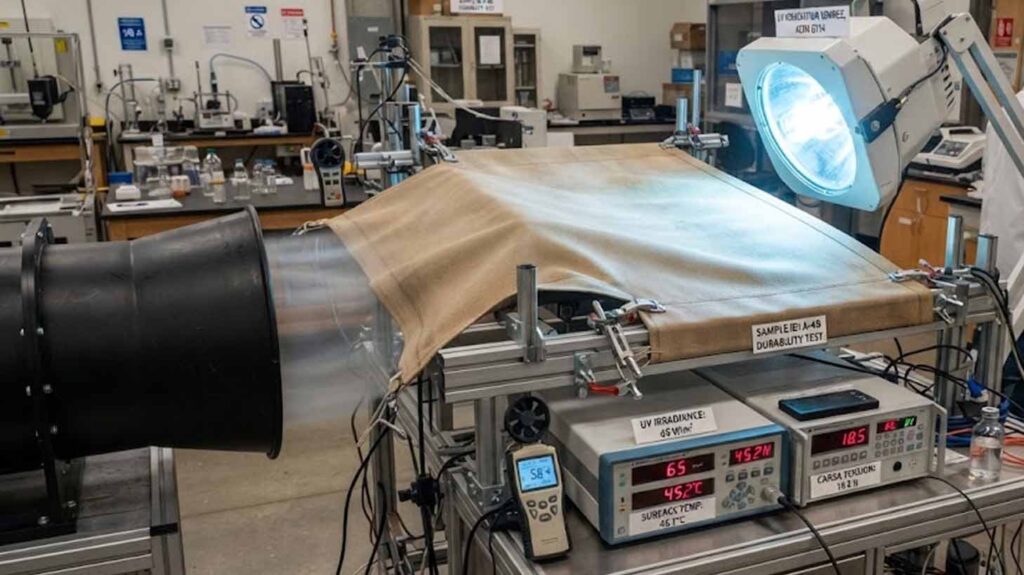
Commercial Awning Maintenance and TCO Calculation
Evaluating commercial canvas options requires analyzing Total Cost of Ownership (TCO), balancing upfront purchase costs against routine maintenance and replacement intervals over a 10-year operational cycle.
| Cost & Maintenance Factor | Solution-Dyed Acrylic | PVC-Coated Fabric |
| Initial Material Sourcing Cost | Moderate to High | Economical to Moderate |
| Recommended Cleaning Frequency | Once Annually (Soft Brush & Water) | Bi-Annually (Pressure Wash/Wipe) |
| Surface Mold & Mildew Vulnerability | Low (Requires air-drying) | Very Low (Non-porous surface) |
| Average Commercial Service Life | 8 – 10 Years | 5 – 8 Years |
| 10-Year Lifecycle Replacement Cycle | Single installation | 1 to 2 installations |
While solution-dyed acrylic carries higher initial sourcing expenditures, its extended 8 to 10 year service life significantly lowers long-term depreciation. Conversely, PVC-coated fabric offers lower entry-level procurement costs, making it ideal for immediate multi-site rollouts. However, PVC surfaces exposed to urban pollution require bi-annual cleaning and may necessitate mid-life material swaps in extreme heat zones.
To demonstrate the real-world financial impact, the table below compares estimated 10-year total expenditure for a standard 100-square-meter commercial installation:
| Material Option | Initial Fabric & Fab Cost | Annual Maintenance (10 Yrs) | Mid-Life Replacement Cost | Estimated 10-Year Total TCO |
| Solution-Dyed Acrylic | $3,500 | $1,000 ($100/yr) | $0 (Single installation) | $4,500 |
| Standard PVC-Coated Fabric | $2,200 | $1,500 ($150/yr) | $2,200 (Mid-life swap) | $5,900 |
Strategic material specification can reduce long-term facility expenditure by up to 35%. Premium acrylic minimizes total amortized costs for permanent retail canopies, while economical PVC provides cost-effective service for high-wear industrial covers.
💡 Frequently Asked Questions
Q: How can commercial property owners extend the service life of canvas awnings?
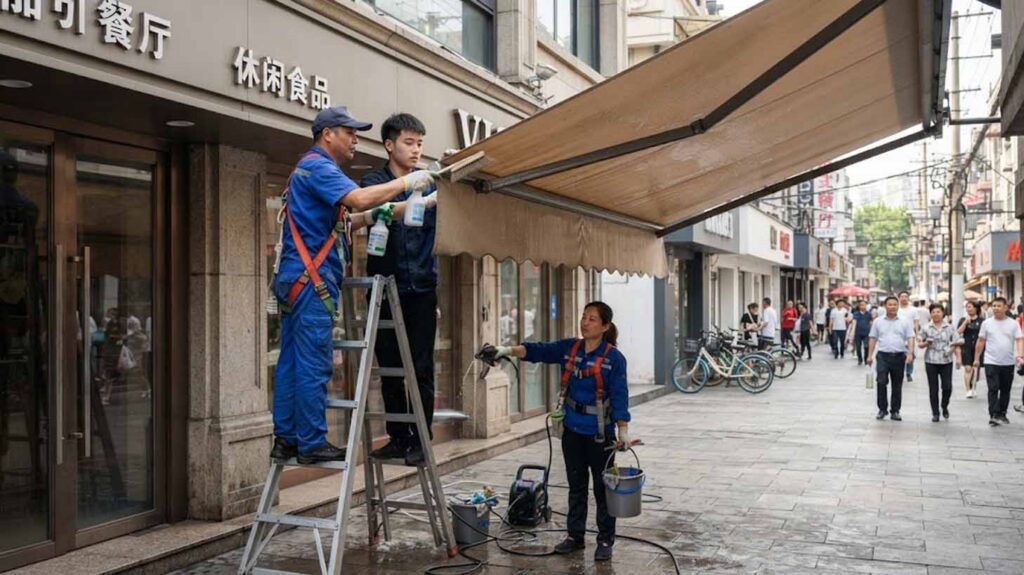
A: Perform seasonal cleaning using soft brushes and neutral soap, retract motorized systems during heavy windstorms, ensure woven acrylics dry completely before storage to prevent mold, and inspect mounting hardware annually.
Choose Sylvanor: Multi-Material Customization Support
Partnering with an established, direct-manufacturing custom canvas awning factory ensures streamlined procurement and high-precision craftsmanship. Sylvanor delivers over 25 years of manufacturing excellence, operating as a reliable OEM/ODM partner for commercial clients worldwide.
Factory Capacity & Production Scale
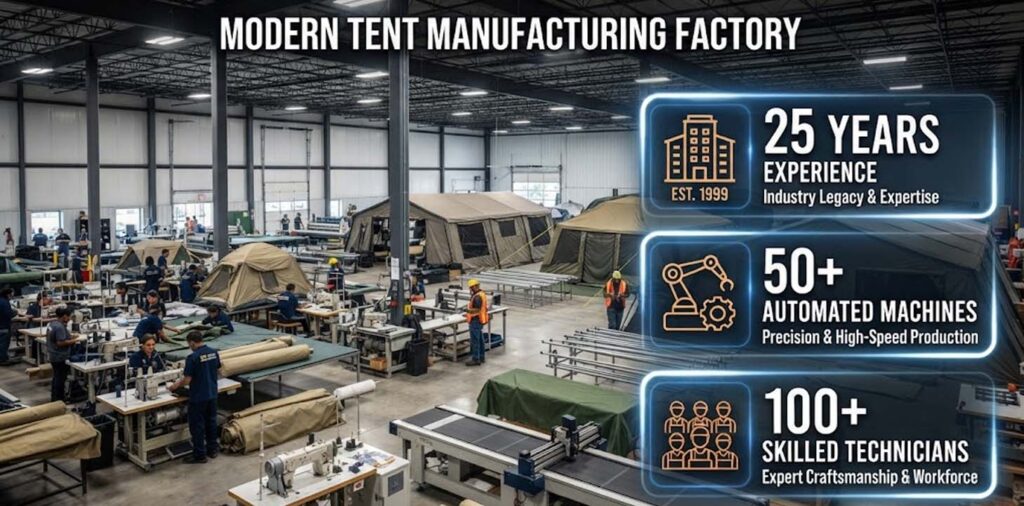
- Industry Experience: 25+ years of specialized manufacturing in outdoor fabric structures.
- Advanced Equipment: Facility outfitted with 50 automated cutting, high-frequency welding, and heavy-duty sewing units.
- Technical Workforce: 100 experienced production technicians driving consistent quality output.
- Design Portfolio: Over 1,000 custom canopy models developed for global B2B clients.
Comprehensive OEM/ODM Customization Scope
- Material Customization: Full sourcing support for solution-dyed acrylics, flame-retardant PVC, and UV-treated polyester fabrics.
- Branding & Aesthetics: Screen printing, digital logo transfer, and custom Pantone color matching.
- Structural Engineering: Customized width spans, projection lengths, and reinforced frame mountings.
- Export Logistics: Private-label packaging, barcode integration, and heavy-duty export crating compliant with ISO9001 standards.
💡 Frequently Asked Questions
Q: What is the lead time and minimum order quantity (MOQ) for custom commercial awning orders from Sylvanor?
A: Standard B2B production lead times range from 15 to 25 days depending on order volume and custom fabric treatments. Sylvanor offers flexible MOQs tailored for commercial projects, trial brand orders, and full container wholesale shipments.